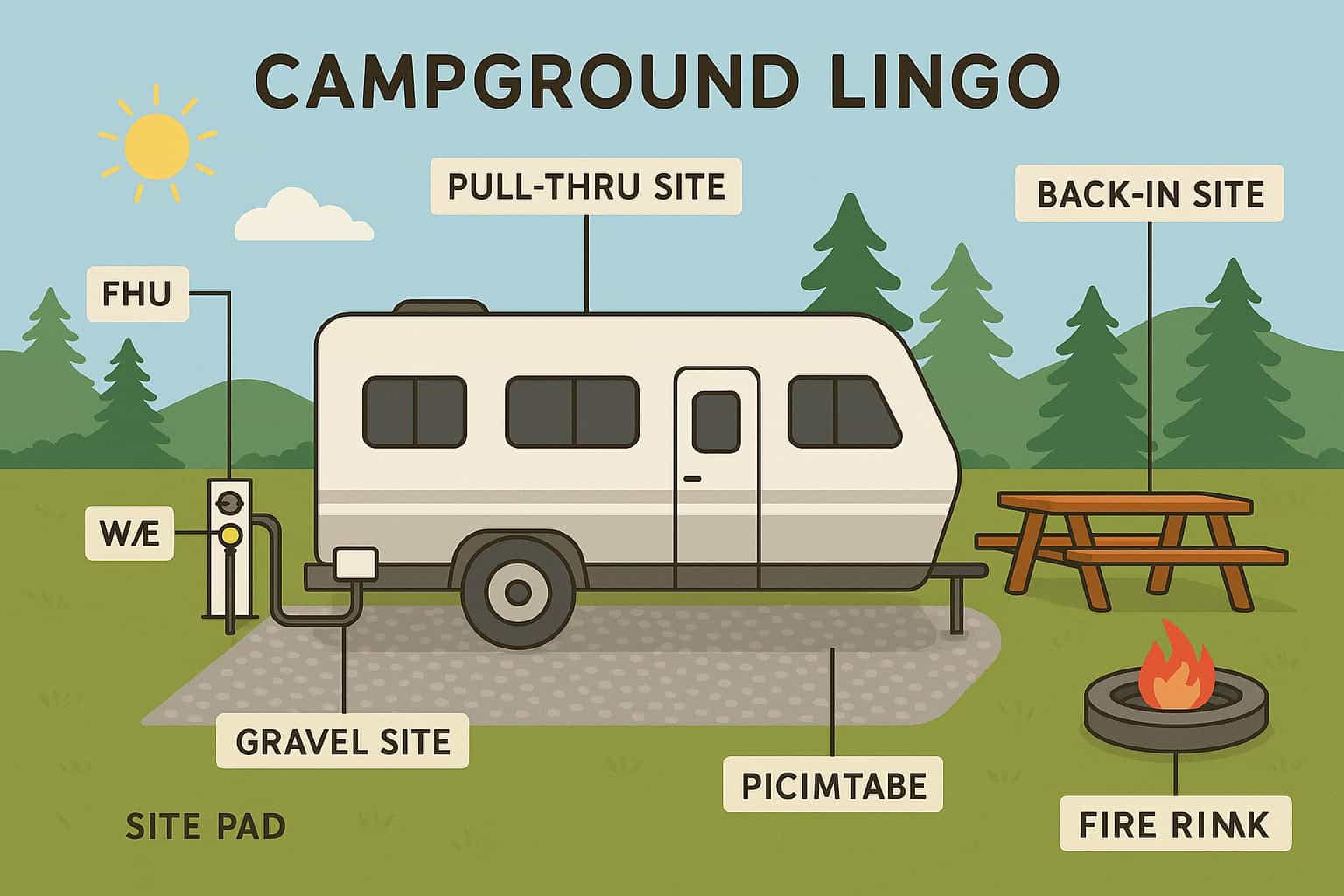
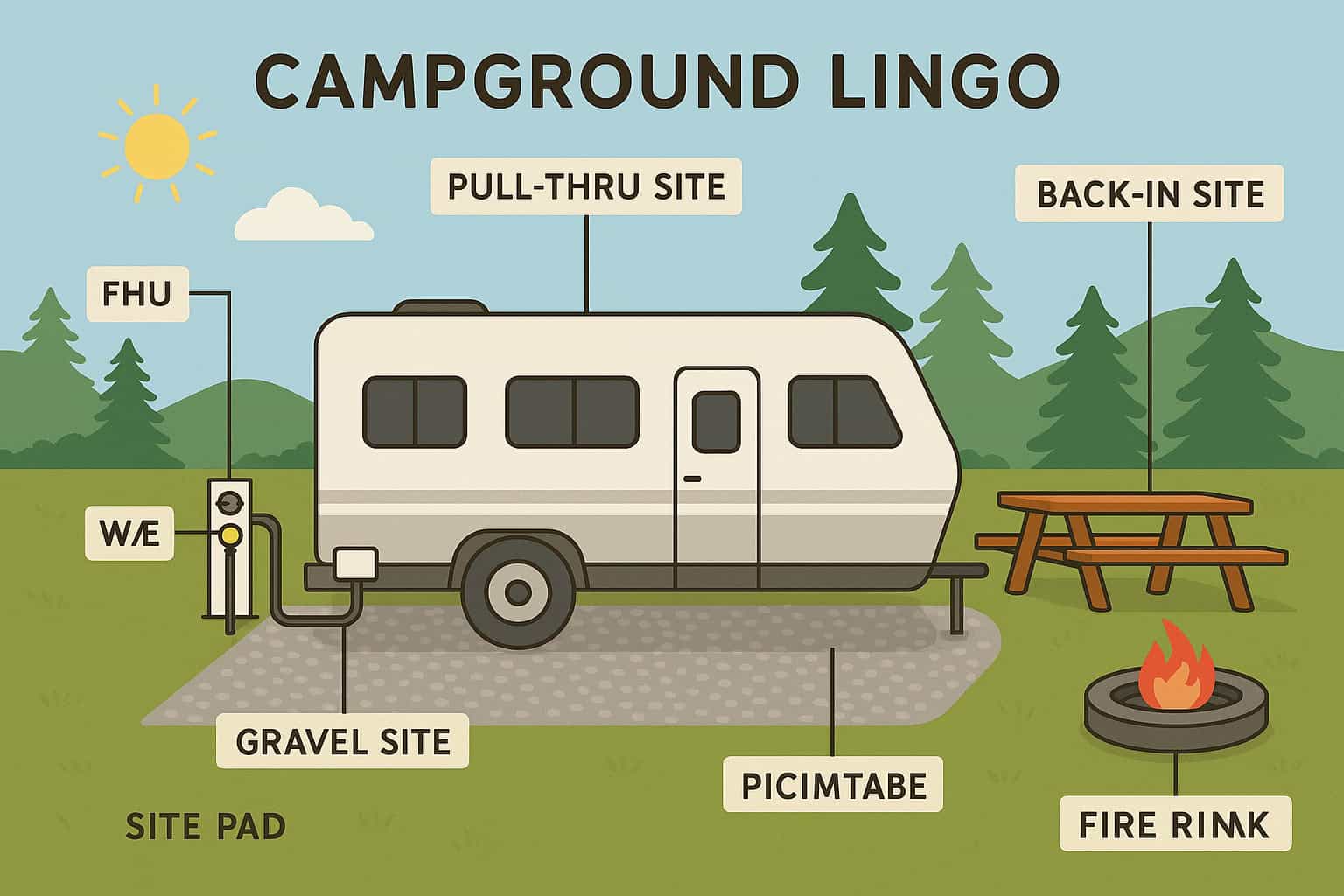
Ever looked at a campground map or booking site and thought, “What does that mean?”
You’re not alone.
Campgrounds use a lot of short words and funny codes. FHUs? Pull-thru? 30-amp? Don’t worry! This guide breaks it all down so you’ll know exactly what to expect at your next stay.
Let’s learn the lingo!
🛠️ FHU = Full Hookups
FHU stands for Full Hookups. That means the campsite includes:
-
Electric (power to your rig)
-
Water (fresh water for sinks and showers)
-
Sewer (a place to dump waste water from your tanks)
This is the most complete type of campsite setup. You won’t need to visit a dump station when you leave—because it’s all connected!
🧼 W/E = Water & Electric Only
Some campsites offer Water and Electric, but no sewer. You can still:
-
Run your sink and shower
-
Use your lights and A/C
But you’ll need to dump your tanks later at a central dump station in the campground.
🚐 Pull-Thru Site
A Pull-Thru Site is just what it sounds like:
You pull your RV in one side and pull out the other.
-
Great for big rigs or RVers who don’t want to back up
-
Easy in, easy out
-
Often costs a bit more
Perfect for first-timers or overnight stops!
🔄 Back-In Site
A Back-In Site means you drive forward and then back your RV into the space.
-
Usually found in state parks and tighter campgrounds
-
Often cheaper than pull-thrus
-
Takes a bit more skill to park (but you’ll get better fast!)
Tip: If you’re not confident yet, practice in an empty parking lot before your trip.
⚡ 30 Amp vs. 50 Amp Service
This is about the power hookup at your campsite.
🔌 30 Amp
-
Standard for smaller rigs
-
Powers most basic needs (A/C, microwave, lights, outlets)
-
Uses a plug with three prongs
🔌 50 Amp
-
For bigger RVs or those with two A/C units
-
Can run more things at once (washer, dryer, etc.)
-
Uses a plug with four prongs
⚠️ Always check your RV’s power needs before plugging in!
🅿️ Site Pad Types
Campgrounds may list what type of ground the RV will park on:
-
Gravel (most common)
-
Concrete or paved (flat and clean)
-
Dirt or grass (watch out after rain)
Each has its pros and cons. Gravel drains well. Concrete is level. Dirt can get muddy.
🔥 Other Helpful Terms
-
Fire Ring: A spot to safely build a campfire
-
Picnic Table: Usually included at each campsite
-
Dump Station: A place to empty your gray and black tanks
-
Bathhouse: Shared showers and toilets
-
Quiet Hours: Time when loud noise (like music or generators) isn’t allowed
-
Boondocking: Camping without any hookups—also called “dry camping”
🧭 Choosing the Right Site for You
Here’s how to pick the perfect spot:
-
New to RVing? Try a pull-thru FHU
-
Want nature and don’t mind a little extra work? Try a back-in W/E site
-
Just sleeping for one night? Go easy with gravel pull-thru
-
Need power for big appliances? Make sure you book a 50 amp spot
Final Thoughts
Campground lingo might look confusing at first, but once you learn the basics, it all makes sense. These terms help you find the right site for your rig, your needs, and your trip style.
So next time you book a site and see “FHU Back-In 30A Gravel Pad,” you’ll know exactly what that means.