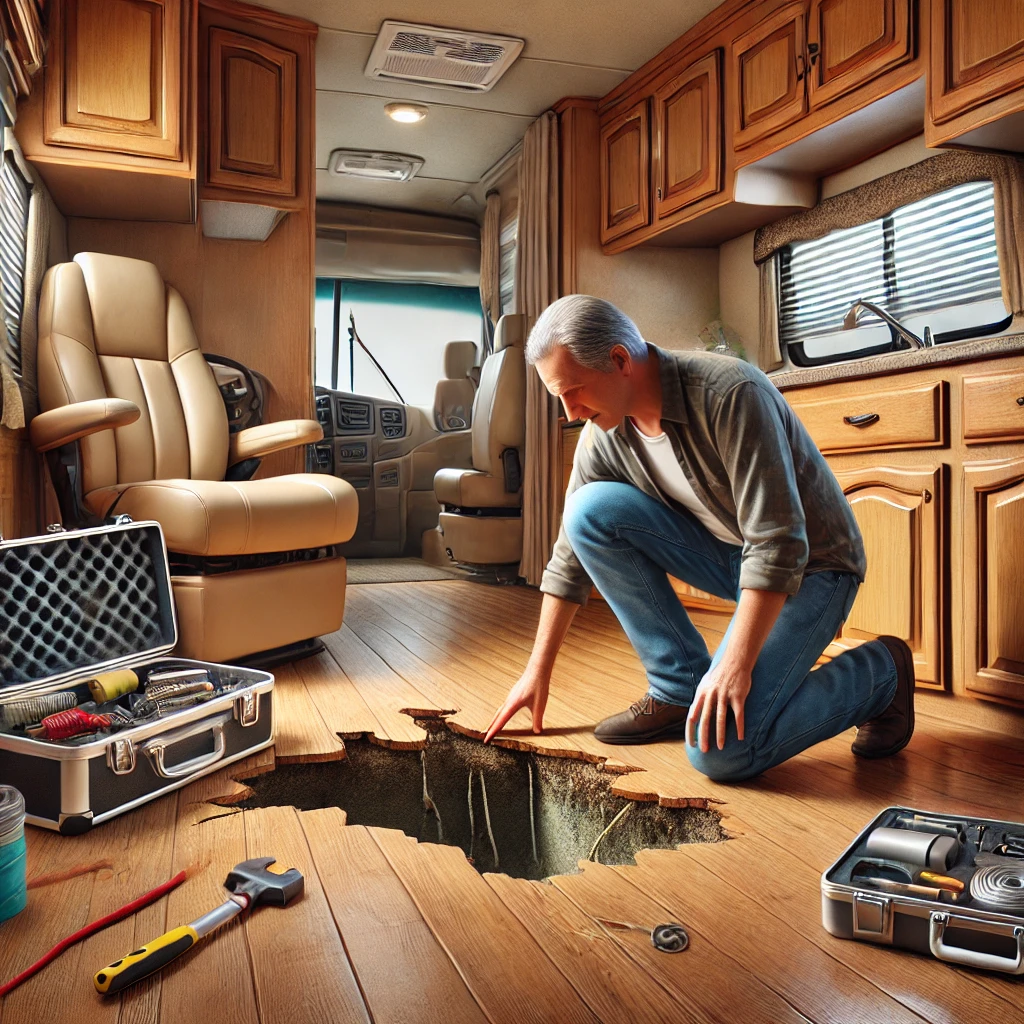
A soft spot on your RV floor may seem like a minor annoyance at first, but it’s often a warning sign of a much bigger problem. Whether it’s due to water damage, rot, or structural weakening, ignoring it can lead to costly repairs—or even unsafe conditions inside your RV.
If you’ve noticed a squishy, sagging, or unstable section of flooring in your RV, don’t wait! Here’s why you should address it immediately and how to diagnose and repair the damage before it gets worse.
🚨 Why Soft Spots on RV Floors Are a Big Deal
A spongy or weak floor isn’t just annoying—it could mean:
🚫 Water damage from a leak – The most common cause, often from a cracked seal, plumbing leak, or roof issue.
🚫 Rotting plywood or subfloor – Once wood soaks up water, it breaks down and loses its strength.
🚫 Delamination – If moisture reaches laminated layers of flooring, they separate and weaken.
🚫 Structural weakening – If the damage spreads, it can compromise the entire RV floor.
✔ Acting fast can save you thousands in repairs and prevent major safety risks!
🔍 How to Diagnose a Soft Spot in Your RV Floor
If you suspect floor damage, follow these steps to determine the cause:
1. Identify Where the Soft Spot Is Located
✔ Near the entry door? Could be water leaking from a worn-out weather seal.
✔ In the bathroom or kitchen? Likely a plumbing or sink leak.
✔ Under a window? Check for leaks in the frame or wall seams.
✔ Random spots in the main living area? Condensation or past spills might be the culprit.
🌟 Pro Tip: If the floor feels mushy, bouncy, or warped, push down with your hand to check if it gives under pressure.
2. Check for Signs of Water Damage
🚰 Inspect under sinks & appliances for leaking pipes.
🛑 Look for water stains or bubbling on walls or the ceiling.
🌧️ Examine the RV’s exterior seams & roof for cracks or gaps.
🔦 Shine a flashlight under your RV—if you see damp insulation or rotting wood, the damage may be widespread.
✔ If moisture is the cause, fixing the leak ASAP is the first step!
🛠️ How to Fix a Soft Spot on Your RV Floor
🪛 Step 1: Remove the Damaged Flooring
- Cut away the soft, rotting plywood using a utility knife or saw.
- Expose the subfloor and check if the damage extends further.
- Let the area dry completely before adding new flooring.
🌟 Pro Tip: If mold is present, use a mold-killing solution before replacing any materials.
🔨 Step 2: Reinforce or Replace the Subfloor
- For minor soft spots: Reinforce with plywood patches over the weak area.
- For severe damage: Remove and replace entire subfloor sections.
- For added support: Use marine-grade plywood or foam board insulation to prevent future sagging.
🌟 Pro Tip: Apply waterproof sealant around seams to protect against future moisture damage.
🧹 Step 3: Install New Flooring
- Choose a water-resistant RV flooring material like:
✔ Vinyl plank – Durable & easy to clean.
✔ Laminate – Affordable but prone to swelling if wet.
✔ Plywood with carpet or linoleum – A budget-friendly fix.
🌟 Pro Tip: Avoid thick tile or heavy wood—they can add too much weight to your RV.
🚫 How to Prevent Future Soft Spots in Your RV Floor
✔ Check for leaks regularly – Inspect the roof, windows, plumbing, and seams.
✔ Seal your RV’s exterior – Use flexible sealant to keep water out.
✔ Use waterproof mats – Protect high-risk areas (kitchen & bathroom).
✔ Improve ventilation – Prevent moisture buildup with dehumidifiers & roof vents.
✔ Act fast if you spot a problem! The longer you wait, the worse the damage gets.
🚐 Final Thoughts: Don’t Ignore a Soft Spot!
A soft RV floor isn’t just a cosmetic issue—it’s a warning sign of water damage, structural weakness, or mold. Fixing it early can save you thousands in repairs and keep your RV safe for travel.
🚨 Noticed a soft spot in your RV? Don’t wait—inspect it today!
💬 Have you ever had to repair an RV floor? Share your experience in the comments!