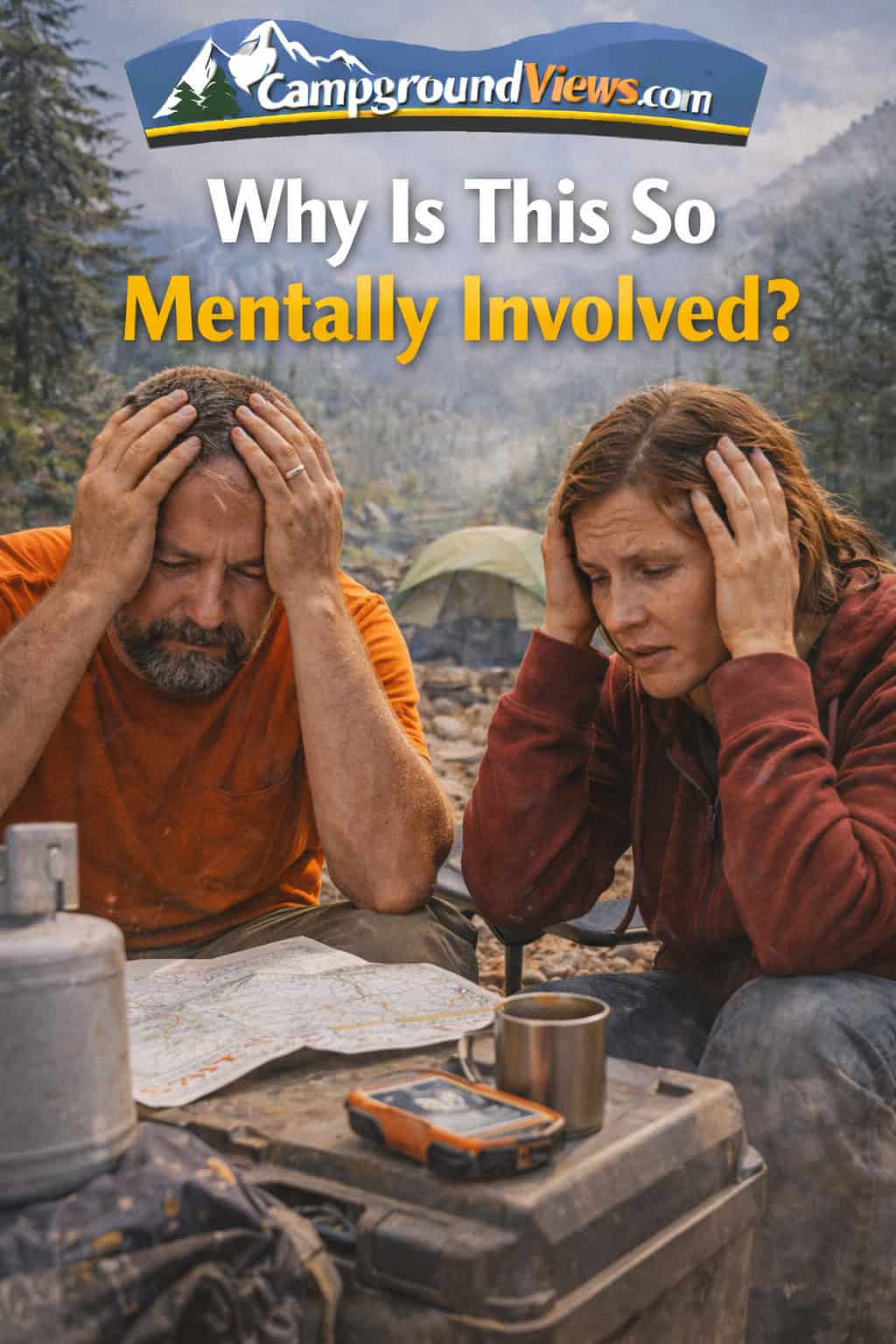
(I thought we were just… going outside.)
You didn’t sit down to solve problems.
You didn’t plan to make decisions.
You certainly didn’t expect to be mentally on all day.
And yet—here you are.
Managing. Tracking. Anticipating.
Wondering, quietly but sincerely:
Why is this so mentally involved?
🧠 1. Because Nothing Is Automatic
At home, things just… happen.
Here? Everything requires intent.
-
Water doesn’t flow unless you decide it should
-
Power exists conditionally
-
Comfort is negotiated, not guaranteed
You’re not stressed.
You’re engaged.
Continuously.
🛠 2. Every Small Thing Has a Follow-On Effect
One decision creates three more.
If you:
-
open the awning, you consider wind
-
cook now, you plan cleanup
-
shower, you think about tanks
-
sit down, you remember something you meant to do
Nothing exists in isolation.
This isn’t overthinking.
It’s systems awareness.
🧭 3. You’re Constantly Running “Background Checks”
Even when you’re “relaxing,” part of your brain is quietly asking:
-
Is the weather shifting?
-
Is that noise new?
-
Did we lock that?
-
Should we adjust something before later?
You’re not anxious.
You’re monitoring.
Camping is low-level vigilance with a view.
🪑 4. Rest Requires Justification
At home, rest is default.
Here, rest feels earned.
You don’t sit until:
-
things are set
-
nothing feels urgent
-
and you’ve mentally cleared the board
And even then, you sit lightly—
ready to get up if needed.
This is not inability to relax.
It’s earned stillness.
😅 5. Decision Fatigue Sneaks In Quietly
No single choice is hard.
But after:
-
parking
-
levelling
-
setting up
-
adjusting
-
planning food
-
managing conditions
Your brain is tired.
Not overwhelmed.
Just… worked.
🧠 6. The Environment Is an Active Participant
Nature doesn’t pause.
The sun moves.
The wind shifts.
The temperature changes.
So your mind stays flexible.
This isn’t mental overload.
It’s responsiveness.
🧘 7. Experience Lowers the Effort (Eventually)
The more you do this, the less you think.
Some things become instinct.
Others become accepted.
But even experienced campers will tell you: Camping never becomes mindless.
It just becomes manageable.
🧠 8. This Is the Trade-Off You Signed Up For
Camping isn’t mentally easy because it replaces convenience with control.
You give up automation.
You gain agency.
And agency takes thought.
💬 Final Thoughts
“It’s so mentally involved” isn’t a complaint.
It’s an observation.
Camping asks you to be present—not just physically, but cognitively.
To notice.
To decide.
To adapt.
That’s why it’s tiring.
That’s also why it’s satisfying.
Because when you finally sit—
and nothing needs you for a moment—
that quiet feels earned.
🐟 Want fewer mental load moments on arrival? Use Campground Views to preview site layout, access, and conditions before you book—so fewer decisions stack up at once.
🔗 Follow us for more RV life truths, cognitive realism, and content for people who’ve absolutely thought, “Why am I using my whole brain for this?” and kept going anyway.