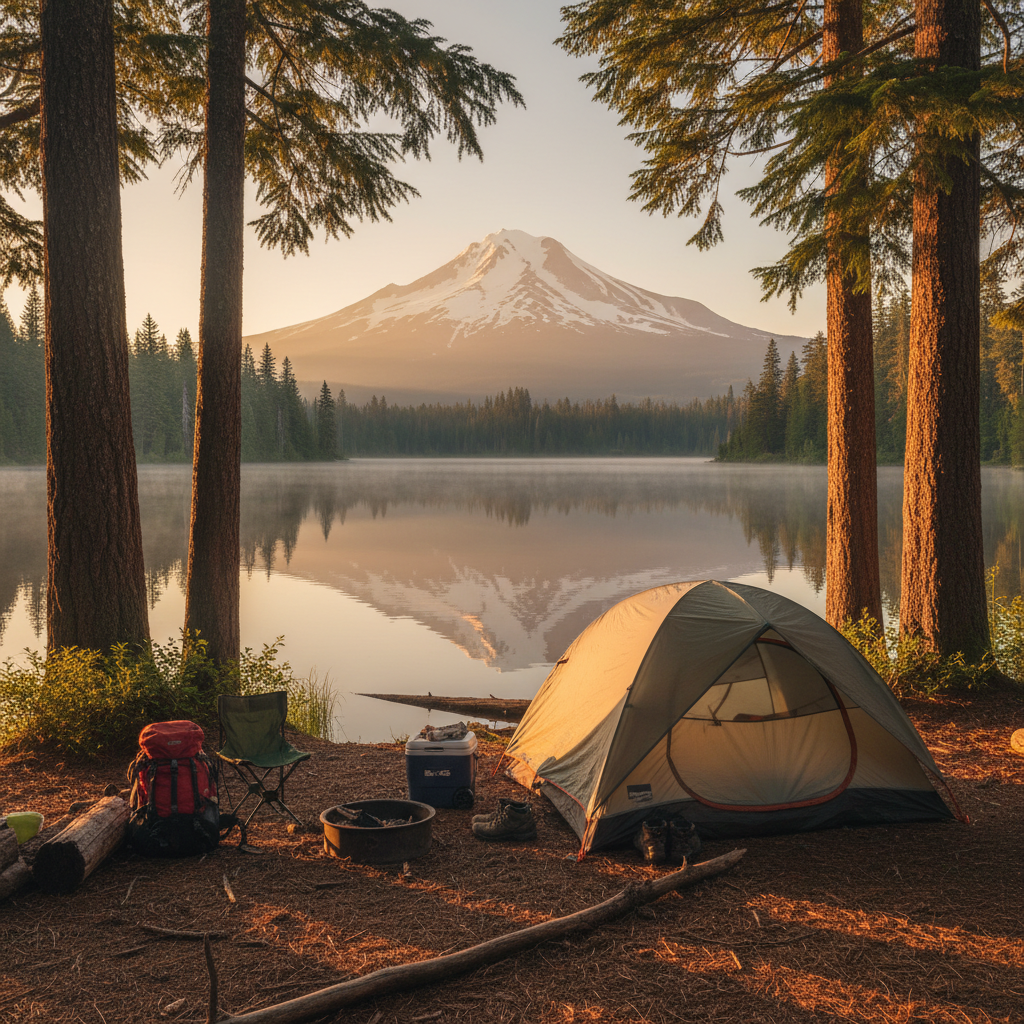
Why Trillium Lake Is the Ultimate Gear Test Ground
Few campgrounds in North America deliver the kind of jaw-dropping scenery that Trillium Lake Campground in Mt. Hood National Forest offers. That iconic reflection of snow-capped Mt. Hood shimmering across a glassy lake isn't just Instagram gold — it's a proving ground for your camping gear. With misty Pacific Northwest mornings, unpredictable mountain weather, and a landscape that demands you actually get outside and explore, Trillium Lake will reveal exactly which pieces of gear are worth their weight and which ones belong back on the store shelf.
Whether you're a first-time camper or a seasoned RV road warrior, we've put together the ultimate gear guide inspired by what you'll actually encounter at this beloved US Forest Service campground. Browse the virtual tour and campground details at CampgroundViews.com before you pack a single bag — knowing the layout and terrain in advance makes all the difference.
Sleep Systems: Don't Let the Mountain Cold Catch You Off Guard
Trillium Lake sits at roughly 3,600 feet elevation, and even in summer, nighttime temperatures can dip into the low 40s°F — sometimes lower in early June or late September. Your sleep system is non-negotiable here.
- Sleeping Bag: Opt for a 20°F-rated sleeping bag minimum. The REI Magma 15 or Kelty Cosmic 20 are excellent mid-range options that compress well and handle damp air like a champ.
- Sleeping Pad: An insulated pad with an R-value of 3 or higher keeps cold ground from stealing your body heat. The Therm-a-Rest NeoAir XTherm is a top-tier choice for tent campers.
- Tent: A 3-season tent with a full rainfly is essential. The Pacific Northwest doesn't ask permission before dropping rain. Look for tents with taped seams and a solid vestibule for wet gear storage.
Layering Gear: Master the Mt. Hood Microclimate
Mornings at Trillium Lake are often cool and misty, afternoons can warm beautifully, and evenings drop fast once the sun dips behind the ridge. The layering system isn't just smart — it's survival strategy.
- Base Layer: Merino wool wins every time in damp environments. It regulates temperature, resists odor, and dries faster than cotton.
- Mid Layer: A lightweight fleece or down jacket packs small and delivers serious warmth around the campfire.
- Shell Layer: A waterproof, breathable rain jacket — think Marmot Precip or Patagonia Torrentshell — is non-negotiable. Pacific storms don't send advance notice.
Camp Kitchen Essentials for Lakeside Cooking
With that stunning Mt. Hood backdrop, every meal at Trillium Lake feels like fine dining. Elevate your camp kitchen with gear that performs as beautifully as the scenery.
- Stove: The MSR PocketRocket 2 is compact, reliable, and boils water fast — perfect for morning coffee with a view. RV campers will love the convenience of their onboard range, but a backup camp stove is always wise.
- Cookware: Lightweight titanium or hard-anodized aluminum sets reduce pack weight without sacrificing performance. The GSI Outdoors Pinnacle Dualist is perfect for couples.
- Bear Canister or Bear Box: Trillium Lake is in active bear country. Use the provided bear boxes at your site religiously, and store all food, toiletries, and scented items securely every single night.
Fishing and Photography Gear Worth Bringing
Trillium Lake is stocked with rainbow trout and is one of the most photographed spots in all of Oregon. A simple ultralight fishing rod setup and an Oregon fishing license are all you need to try your luck at sunrise. For photographers, a wide-angle lens and a sturdy tripod capture that legendary Mt. Hood reflection — plan for blue hour, just after sunset, when the light turns pure magic.
Plan Smarter with CampgroundViews.com
Before you finalize your packing list, take a virtual tour of Trillium Lake Campground on CampgroundViews.com. Seeing the actual site layouts, road widths, and surrounding terrain helps you decide whether to bring the kayak, how much firewood to haul in, and which site suits your rig or tent setup best. With 28,000+ campgrounds and 3,600+ virtual tours, it's the smartest first step in any camping trip — especially one as special as Mt. Hood.