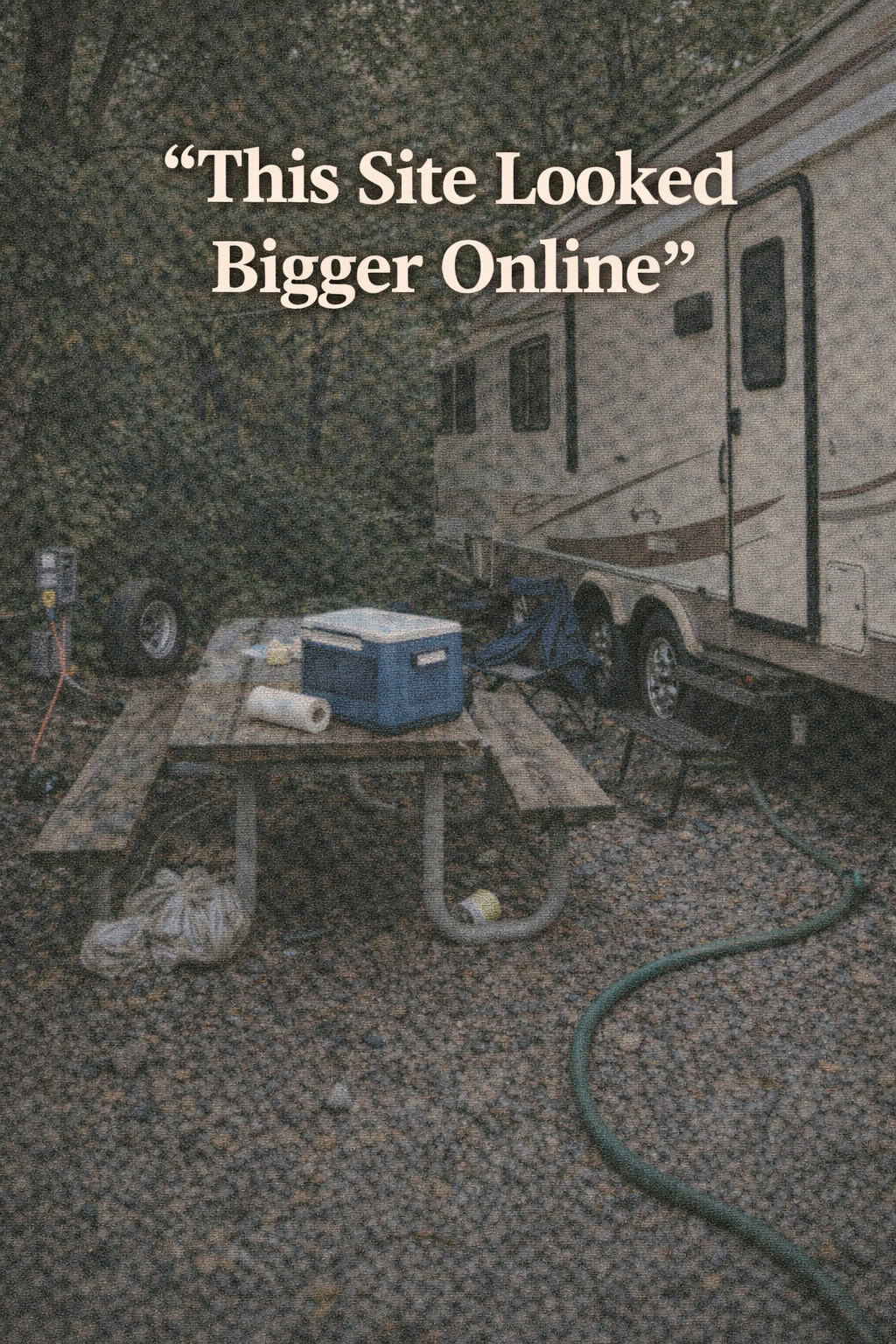
(Because photos are optimistic and reality is… compact.)
You booked it with confidence.
The listing looked great. The map looked spacious. The photos had angles that said, “Plenty of room!”
Then you arrived.
And suddenly your campsite is:
-
narrower than your turning radius
-
bordered by a tree with bad intentions
-
and just close enough to the neighbors to learn their dinner plans
This site looked bigger online. It always does.
📸 1. The Camera Was Working Overtime
Campground photos are taken with:
-
wide-angle lenses
-
perfect lighting
-
and the strategic absence of any RV larger than a toaster
They show “space.”
They do not show:
-
slope
-
roots
-
posts
-
or the picnic table placed exactly where your door wants to open
The photos didn’t lie.
They just omitted key operational facts.
🗺 2. The Map Is Not to Scale (Emotionally or Otherwise)
The campground map makes every site look like a neat little rectangle.
In real life, that “rectangle” includes:
-
a curve you can’t see
-
an uneven edge
-
a fire ring in your path
-
and a mystery stump waiting for your shin
The map is a suggestion.
Reality is a field test.
🌳 3. Trees Take Up More Space Than You Remember
The listing says: “Beautiful shade.”
And yes—shade is lovely.
But shade comes from trees, and trees come with:
-
low branches
-
inconvenient placement
-
and absolutely no respect for slide-outs
You’re not parking in “Site 14.”
You’re parking in “Site 14: Featuring The Tree.”
🔄 4. Backing In Requires New Geometry
The approach looks fine until you start turning.
Then you realize you need:
-
a wider swing
-
more clearance
-
and an extra two feet the universe did not provide
Now you’re doing:
-
small adjustments
-
gentle reversing
-
pretending you meant to do it this way
Meanwhile, the neighbors are casually sitting outside like this is a live show.
🪑 5. Your Outdoor Setup Becomes a Minimalist Lifestyle
You imagined:
-
mat
-
chairs
-
table
-
grill
-
cooler
-
maybe even some lights
Now you’re fitting:
-
two chairs
-
at a polite angle
-
and one person has to step over the mat like it’s a training course
Your campsite aesthetic has shifted from “patio vibes” to “functional survival.”
🔊 6. Proximity Changes the Whole Experience
When sites are tight, you become aware of everything:
-
voices
-
lights
-
dogs
-
door slams
-
the sound of someone unzipping a tent three sites away
No one is doing anything wrong.
You’re just close enough to be part of each other’s lives.
Congratulations—you’re in a community now.
✅ 7. The Fix: Plan for “Smaller Than Expected”
Experienced RVers always have a backup plan:
-
fewer outdoor items
-
a more compact setup
-
quick-deploy gear
-
and the willingness to adapt
If the site is tight, you don’t fight it.
You pivot.
And honestly? You’ll still have a great time.
💬 Final Thoughts
“This site looked bigger online” is not a personal failure.
It’s a universal camping truth.
Photos flatter. Maps simplify. Reality adds:
-
trees
-
slopes
-
posts
-
and the laws of physics
If you can park safely, extend what you need, and avoid clipping the picnic table with your door—call it a win.
The site may be smaller than expected.
But the trip can still be huge.
🐟 Want fewer “why is it like this?” arrivals? Use Campground Views to preview site spacing, layout, and real-world conditions before you book—so you know whether you’re getting “roomy” or “cozy with character.”
🔗 Follow us for more RV life truths, campsite reality checks, and humor for people who’ve absolutely whispered, “We’ll make it work,” while staring at a very compact pad.