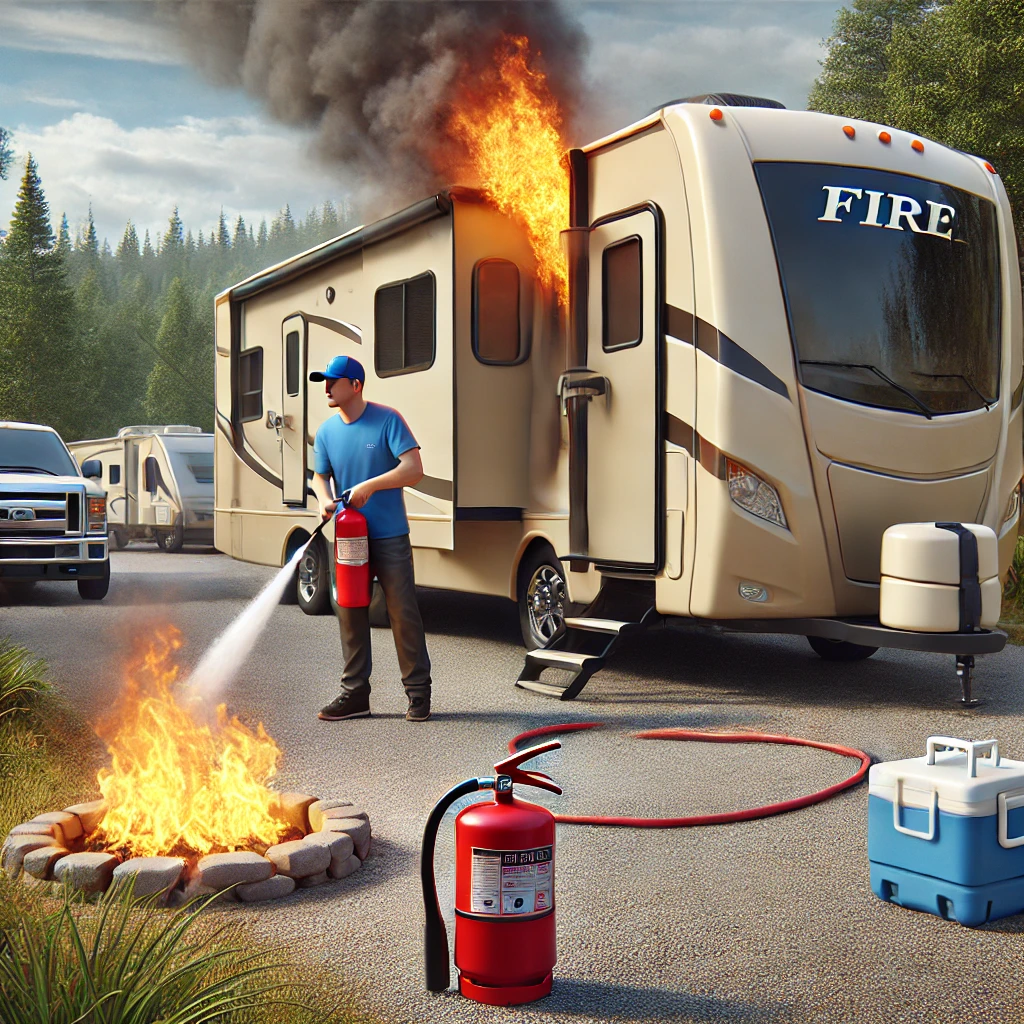
Why RV Fires Happen and How You Can Stay Safe
RVing is all about adventure, but fire safety is one topic that doesn’t get talked about enough. Whether you’re boondocking in the wilderness or parked at a campground, an RV fire can happen in seconds—and spread even faster.
The good news? Most RV fires are preventable if you know the risks and take the right precautions. Here’s what every RVer needs to know about why fires start, how to prevent them, and what to do if the unthinkable happens.
🔥 The Reality of RV Fires: How Common Are They?
According to the National Fire Protection Association (NFPA), RV fires account for hundreds of incidents every year, causing serious damage, injuries, and even fatalities.
Scary Facts About RV Fires
🚒 An RV can be fully engulfed in flames in under 10 minutes
🔥 Nearly 50% of RV fires start in the engine or electrical system
⚡ Propane leaks and faulty wiring are the biggest fire risks in an RV
🚐 Older RVs are at higher risk due to aging appliances and wiring
The bottom line? Fire moves fast in an RV. But with proper maintenance and precautions, you can greatly reduce the chances of it happening.
🚨 The 5 Biggest Causes of RV Fires
Understanding what causes RV fires is the first step to preventing them.
1. Electrical Issues & Overloaded Circuits ⚡
Why It Happens:
✔ Faulty wiring or overloaded outlets
✔ Using damaged extension cords or power strips
✔ Loose connections in breaker panels
🔥 How to Prevent It:
✔ Inspect your electrical system regularly
✔ Don’t plug too many devices into one outlet
✔ Upgrade old wiring in older RVs
✔ Use RV surge protectors to prevent power spikes
2. Propane Leaks & Appliance Malfunctions 🔥
Why It Happens:
✔ Leaky propane lines or faulty regulators
✔ Leaving a stove on accidentally
✔ Pilot lights going out and causing gas buildup
🔥 How to Prevent It:
✔ Check propane lines & fittings for leaks
✔ Turn off propane before traveling
✔ Use a propane leak detector
✔ Never leave the stove unattended
3. Engine & Mechanical Fires 🚛
Why It Happens:
✔ Overheated brakes or tires
✔ Oil or fuel leaks near hot engine parts
✔ Electrical shorts in the engine bay
🔥 How to Prevent It:
✔ Get regular engine inspections
✔ Check for fluid leaks before every trip
✔ Carry a fire extinguisher near the driver’s seat
4. Space Heaters & Cooking Fires 🍳
Why It Happens:
✔ Using space heaters too close to curtains or bedding
✔ Grease fires in the kitchen
✔ Cooking with loose clothing near an open flame
🔥 How to Prevent It:
✔ Never leave a space heater on unattended
✔ Keep a fire extinguisher near the kitchen
✔ Use flame-resistant curtains & materials
5. Battery & Solar System Fires 🔋
Why It Happens:
✔ Poorly installed solar power systems
✔ Overcharging lithium batteries
✔ Battery cables shorting out
🔥 How to Prevent It:
✔ Use a professional for solar installs
✔ Monitor battery temperatures
✔ Install a battery management system
🛑 How to Prevent an RV Fire: The Ultimate Safety Checklist
The best way to stay safe? Prevent fires before they start. Follow this checklist before and during your RV trips.
✅ Install smoke & carbon monoxide detectors—Test them every month
✅ Have at least two fire extinguishers—One near the kitchen, one by the door
✅ Turn off propane when driving—And check for leaks regularly
✅ Inspect electrical systems—Loose wires = fire risk
✅ Keep a fire escape plan—Know how to exit FAST
✅ Never leave cooking unattended—Grease fires happen quickly
✅ Store flammable materials safely—No loose rags near propane or batteries
✅ Check your tires & brakes before every trip—Overheating can start a fire
🚨 BONUS TIP: Have a fire drill! Make sure everyone in your RV knows how to react if a fire starts. Seconds matter.
🔥 What to Do If a Fire Starts in Your RV
Even with precautions, fires can still happen. If you see smoke, flames, or smell something burning, follow these steps immediately.
🚨 Step 1: Get Everyone Out—FAST
✔ Leave everything behind—Your safety is the priority
✔ Have a pre-planned escape route and meet at a safe distance
🚨 Step 2: Shut Off Propane & Power (If Safe)
✔ Turn off propane at the tank
✔ Shut down electrical power at the breaker
🚨 Step 3: Use a Fire Extinguisher (Only If It’s Small & Safe)
✔ If the fire is small and contained, try to put it out
✔ If it’s growing fast, get out and call 911
🚨 Step 4: Call Emergency Services
✔ Give them your exact location (GPS or campground details)
✔ Stay back—RV fires can explode quickly
🚐 Your RV can be replaced. You and your loved ones cannot.
🛑 The Bottom Line: Fire Safety is Non-Negotiable
RV fires are scary, fast, and dangerous—but most are preventable. By understanding what causes fires and taking the right precautions, you can make sure your adventures stay safe.
✔ Maintain your RV’s propane, electrical, and mechanical systems
✔ Keep fire extinguishers & smoke detectors in working order
✔ Have an escape plan and practice it
🚐 Want to see a campground before you book? Take a 360-degree virtual tour at CampgroundViews.com and plan your safe and scenic adventure.
Stay safe, stay aware, and keep rolling. 🔥🚐💨