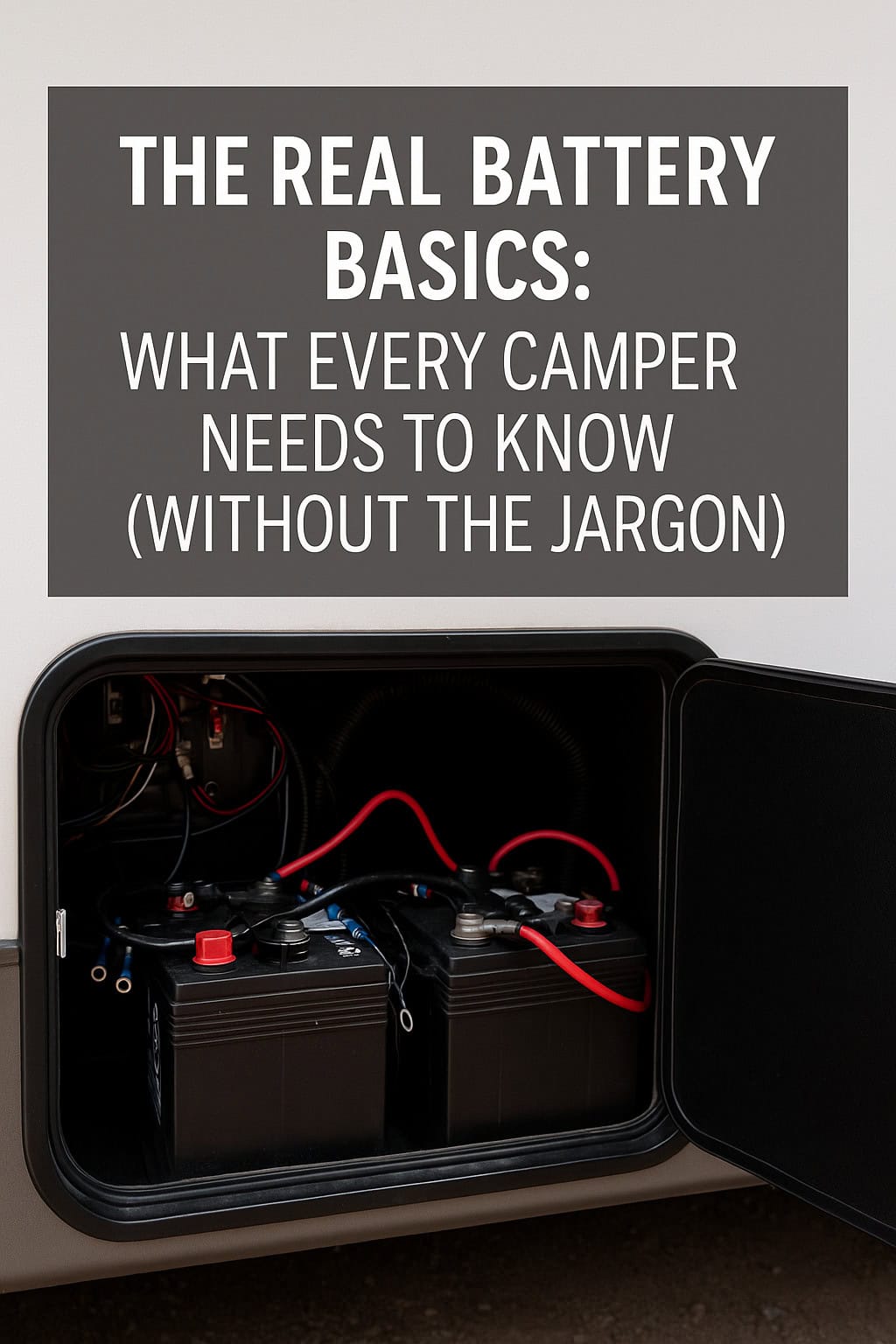
Batteries power much of your camping life—from lights and fans to your fridge and devices. But the technical talk around them can be confusing. Let’s break down the essentials in plain English, so you can camp smarter and worry less.
🔋 What Kind of Battery Do You Have?
Most RVs use either lead-acid or lithium batteries. Lead-acid is cheaper but heavier and needs more care. Lithium batteries cost more upfront but last longer and charge faster.
⚡ Capacity = How Long It Lasts
Capacity is measured in amp-hours (Ah). The higher the number, the longer your battery can power your gear before needing a recharge.
🔌 Charging: Don’t Overdo It
Whether you’re plugged into shore power, running a generator, or using solar panels, avoid overcharging. Smart chargers and monitors help keep your battery healthy and extend its life.
🔄 Cycle Life: How Many Times?
Every battery can only be charged and discharged a certain number of times before it starts to lose capacity. Lithium batteries generally last more cycles than lead-acid.
🛠️ Maintenance Matters (Especially for Lead-Acid)
Lead-acid batteries need regular water checks and cleaning. Lithium batteries require less upkeep but still benefit from occasional inspection.
💡 Quick Tip: Keep a battery monitor handy. It tells you exactly how much power you have left—no guessing required.
Ready to take charge of your power? For expert tips and virtual tours showing ideal setups, follow Campground Views and stay powered up wherever you roam.
What battery questions do you have? Drop them below!