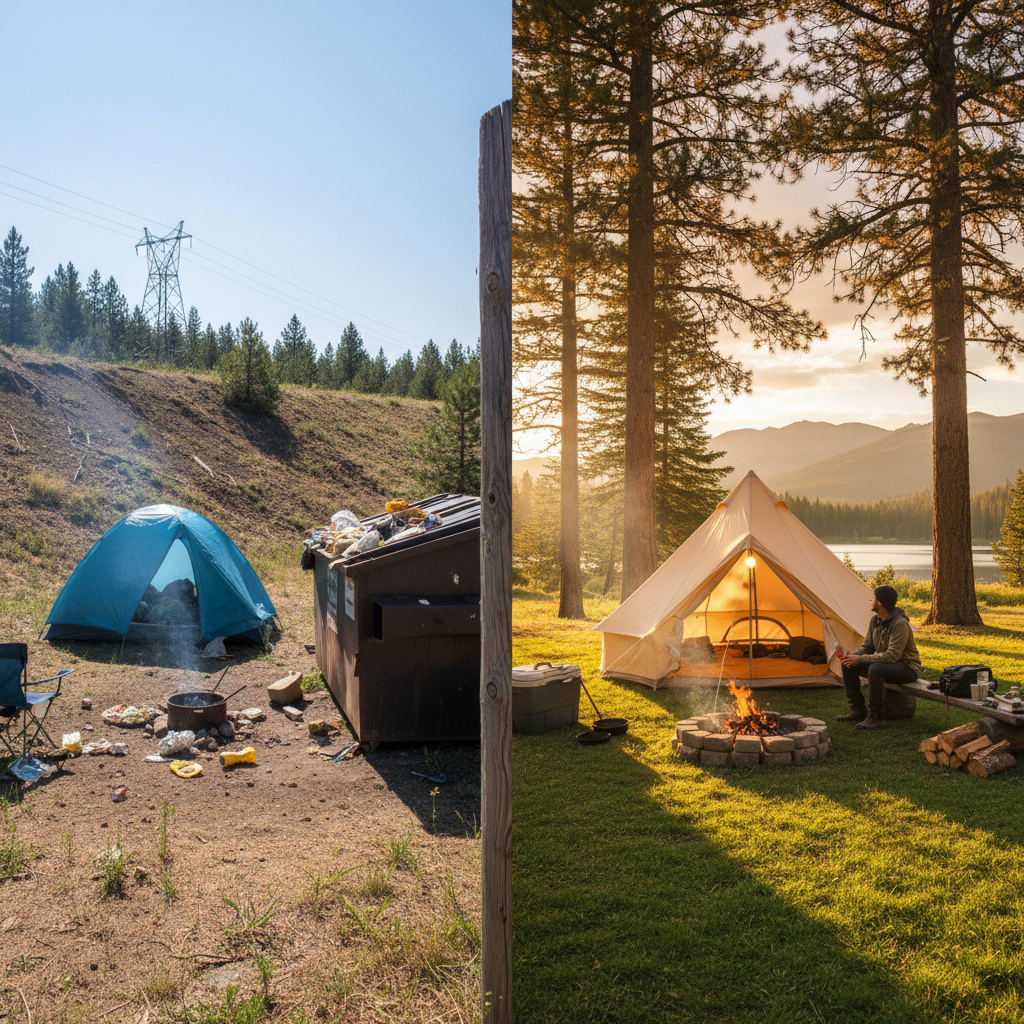
Not All Campsites Are Created Equal
We've all been there. You spend weeks planning the perfect camping trip, finally snag a coveted reservation, drive four hours to a stunning national park — and then discover your campsite is sandwiched between the generator lot and the campground dumpster. The view from your tent? A utility shed. The soundtrack? A humming compressor at 6 a.m.
Bad campsites happen to good campers. But they don't have to happen to you. After cataloging thousands of campgrounds and hosting over 3,600 virtual tours on CampgroundViews.com, we've developed a sharp eye for what separates a memorable campsite from a miserable one. Here's everything you need to know before you click that "Reserve" button.
The Most Common Campsite Mistakes Campers Make
The number one mistake? Booking blind. Many campers select a site based solely on its number and availability, with zero information about what they're actually reserving. Site 47 might sound perfectly neutral — until you realize it's a gravel strip with no shade, a slight downhill slope that drains directly under your tent, and a front-row view of the campground entrance road.
Other frequent offenders include:
- Proximity to bathhouses: Convenient? Sure. But the midnight door-slamming and fluorescent light spill can ruin a good night's sleep.
- End-of-loop sites: These often seem private but can become unofficial pedestrian shortcuts for the entire campground.
- Pull-through sites near park roads: Great for slide-outs, rough for quiet evenings when headlights sweep through your awning every few minutes.
- Unlevel pads disguised by online photos: A wide-angle lens is a campsite's best friend. Your leveling blocks are not always enough.
How to Research a Campsite Like a Pro
The good news? A little homework goes a very long way. Here's our tried-and-true research process before booking any campground.
1. Watch the Virtual Tour First
CampgroundViews.com hosts thousands of immersive virtual tours that let you walk the campground loop before you ever leave your driveway. You can see road width, tree coverage, site spacing, and terrain — the things that photography conveniently leaves out. If a campground has a tour available, there's no excuse to book blind.
2. Read the One and Two-Star Reviews
Five-star reviews are wonderful, but the one and two-star reviews are where the honest intel lives. Look for patterns — if three different campers mention poor drainage or thin site separation, believe them.
3. Use Satellite View on Google Maps
Pull up the campground in satellite mode and zoom in. You can often see individual site footprints, shade tree coverage, proximity to roads or facilities, and even whether sites are on a slope. It takes five minutes and can save a ruined trip.
4. Call the Campground Directly
This one is old-fashioned and wildly effective. Camp hosts and park rangers know their campgrounds intimately. Ask them flat out: "Which sites have the best shade?" or "Are there any sites I should avoid?" They'll usually tell you the truth.
Green Flags: What a Great Campsite Actually Looks Like
Knowing the red flags is only half the battle. Train your eye for the good stuff, too. The best campsites typically offer natural screening from neighboring sites (mature trees or shrubs work better than any privacy fence), a level, well-drained pad, and some distance from high-traffic areas like playgrounds, bathhouses, and entrance roads. A morning sun orientation is ideal for most three-season campers — you'll wake up warm and have natural shade by afternoon.
The Bottom Line: Do Your Homework and Book with Confidence
National park campgrounds are some of the most spectacular places on earth to spend a night under the stars. Don't let a poorly chosen site overshadow that experience. The tools to make a smart, informed reservation have never been better — from CampgroundViews.com's virtual tour library to satellite maps to an honest phone call with a camp host.
The worst campsite you'll ever book is the one you didn't research. The best one? That's out there waiting for you, and now you know exactly how to find it.