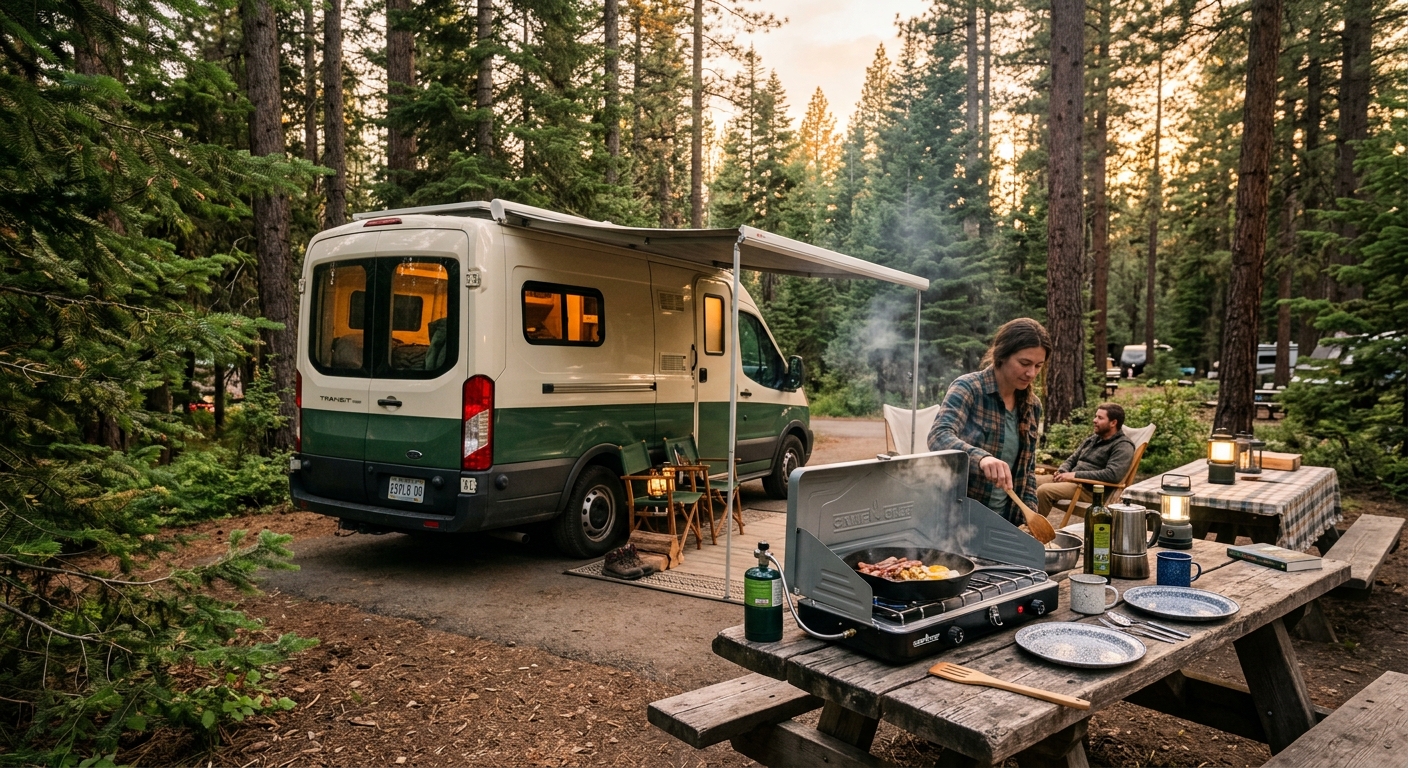
Why Your RV Size Shouldn't Shrink Your Campsite Menu
The debate over ideal RV length for national park camping is real — pull-through sites have limits, canopy branches have opinions, and some of America's most stunning campgrounds were designed long before 45-foot Class A rigs existed. But here's what the RV length conversation often misses: no matter what size rig you roll in with, the magic of a national park camping trip lives and dies by what comes out of your camp kitchen.
Whether you're squeezing a 19-foot travel trailer into a tight Yosemite site or parking a compact Class B van at a Rocky Mountain meadow campground, cooking delicious, satisfying meals in a modest space is an art form worth mastering. Consider this your guide to doing exactly that.
The Compact Kitchen Mindset
Smaller rigs — the sweet spot for most national park camping tends to fall between 20 and 27 feet — mean smaller kitchens. That's not a limitation. That's a creative challenge. Professional chefs work in galley kitchens the size of a closet and produce Michelin-star meals. Your two-burner propane stove and 6-cubic-foot refrigerator are more than enough to pull off memorable meals under a canopy of pines.
The secret? Think like a backpacker, cook like a foodie. Prioritize ingredients that do double and triple duty across multiple meals, minimize waste, and maximize flavor.
Multi-Meal Ingredient Planning: The National Park Camper's Best Friend
Before you even hitch up the trailer, plan your meals around a core set of versatile ingredients. Here's a framework that works beautifully in compact RV kitchens:
- Rotisserie chicken: Night one it's sliced over a simple salad. Night two it becomes chicken tacos with a squeeze of lime. Morning three? Chicken hash with potatoes and peppers.
- A dozen eggs: Scrambled breakfasts, a frittata cooked in a cast iron skillet, or hard-boiled trail snacks — eggs are the ultimate compact-kitchen workhorse.
- Canned white beans: Toss them into pasta, mash them as a side, or blend with olive oil and lemon for a camp-made hummus-style dip around the fire.
- One good hot sauce: It transforms everything. Everything.
The One-Pot National Park Meal That Wins Every Time
When you've spent the day hiking Angel's Landing or chasing sunrise at Acadia, nobody wants to do a sink full of dishes. Enter the one-pot wonder: a campfire or stovetop pasta that feels indulgent but requires minimal cleanup.
Smoky Sausage and White Bean Camp Pasta: Slice one package of smoked andouille sausage and brown it in your camp pot or cast iron. Add a can of diced tomatoes, a can of white beans (drained), a handful of pasta, two cups of chicken broth, and a pinch of smoked paprika. Cover and simmer until the pasta is tender — about 12 minutes. Top with parmesan if you remembered to pack it (you should always remember to pack parmesan). Serves four hungry hikers with zero fuss.
Finding Campgrounds with the Right Setup for Your Kitchen Style
Your cooking ambitions should also influence where you camp. Full hookup sites mean you can run an electric griddle or Instant Pot without worrying about battery drain. Sites with picnic tables and fire rings give you the option to cook over open flame for that irreplaceable smoky char. Before your trip, use CampgroundViews.com to virtually tour campgrounds near your target national park — you can actually see the site layouts, fire ring placement, and table setups before you book, so there are no surprises when you pull in after a long travel day.
Pro Tips for Cooking in Tight RV Kitchens
- Nest your cookware: A single cast iron skillet and one deep pot handle 90% of camp meals.
- Prep at home: Chop vegetables, marinate proteins, and pre-measure spices into small containers before you leave the driveway.
- Use your outdoor space: A small folding table beside your rig extends your kitchen counter dramatically.
- Embrace the cooler as pantry: Organize it by meal day so you're not digging at 7 a.m. in the dark.
The Bottom Line
The best RV length for national park camping is the one that fits your site — but the best camp kitchen is the one you build with intention. Pack smart, plan creatively, and use tools like CampgroundViews.com to scout your destination before you arrive. The mountains are waiting, and dinner's going to be incredible.