Why RV Length Is the Most Important Decision You'll Make Before a National Park Trip
Picture this: You've driven 400 miles with your shiny 45-foot fifth wheel, pulled into a legendary national park campground, and the ranger greets you with the words every RVer dreads — "I'm sorry, your rig is too long for any available site." It happens more than you'd think, and it's completely avoidable with a little advance planning.
At CampgroundViews.com, we've cataloged thousands of campgrounds across North America, including hundreds inside national parks. One pattern stands out clearly in our virtual tour data and user reviews: RV length is the single biggest factor that determines where you can and cannot camp in America's most beloved wilderness destinations.
The Golden Rule: 30 Feet or Under Opens the Most Doors
If you're serious about national park camping, the sweet spot for maximum flexibility is an RV between 20 and 30 feet. Here's why this range consistently wins:
- Site compatibility: The majority of pull-through and back-in sites inside national parks max out at 30–35 feet.
- Maneuvering on mountain roads: Tight switchbacks and narrow forest roads become dramatically less stressful in a shorter rig.
- Tree canopy clearance: Older campgrounds with established trees were designed for the Airstreams of the 1960s, not modern super-C motorhomes.
- More campground options nearby: When the park itself is full, smaller rigs can access overflow campgrounds that larger units can't.
Breaking Down the Length Categories
Under 20 Feet: Maximum Flexibility, Minimum Comfort
Class B campervans and small teardrop trailers under 20 feet can access virtually every campsite in every national park. You'll park anywhere, hike everywhere, and feel smugly superior at every check-in. The trade-off is real, though — limited storage, tight sleeping quarters, and no slide-outs mean you're roughing it relative to larger rigs. For solo travelers and adventurous couples, this is hard to beat.
20–30 Feet: The National Park Sweet Spot
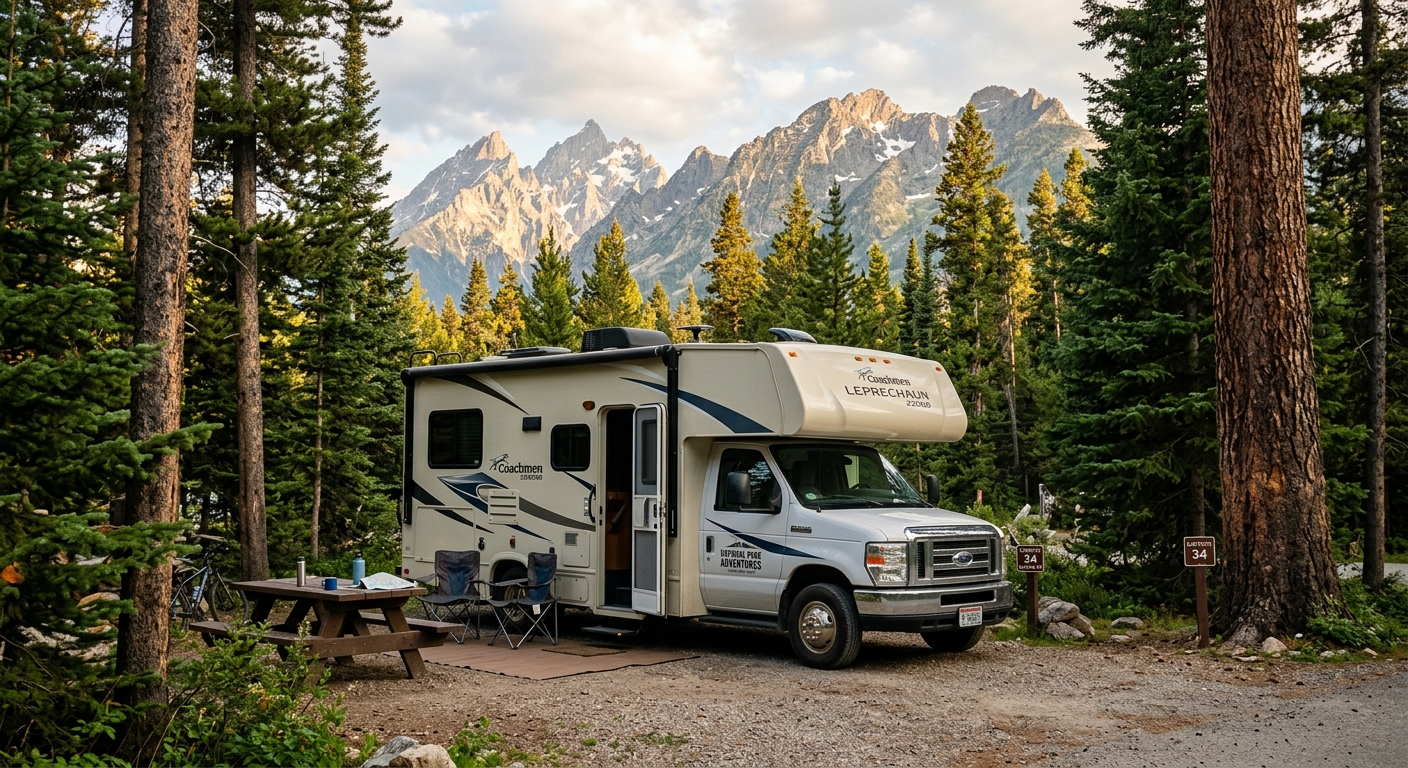
This is where most experienced national park RVers land, and for good reason. A 25-foot Class C motorhome or a 28-foot travel trailer gives you a real kitchen, comfortable sleeping arrangements, and enough gear storage for extended trips — all while fitting into roughly 80–85% of national park campground sites. If you're buying or renting an RV specifically for park-hopping adventures, target this range first.
30–40 Feet: Proceed With Research
Fifth wheels and Class A coaches in this range can absolutely do national park trips, but they require homework. Before you book, use CampgroundViews.com to browse virtual tours of your target campground so you can visually assess road widths, site dimensions, and tree clearance before you ever leave home. Many parks have specific loops designated for larger rigs — knowing those in advance is a game-changer.
Over 40 Feet: Stay Outside the Gates
Super-sized luxury coaches are magnificent rolling homes, but national park interiors are largely off-limits. The smart strategy here is to find a full-hookup RV park just outside the park entrance, unhook your tow vehicle or bike, and explore the park on wheels you can actually maneuver. Many gateway communities have excellent campgrounds set up exactly for this purpose.
Pro Tips for Any RV Length
- Always check the campground's maximum length limit on recreation.gov before booking — it's listed right in the site details.
- Walk or drive the campground loop virtually on CampgroundViews.com before committing. Our 360° tours let you see exactly what you're getting into.
- Call the park directly if you're borderline on length. Rangers are incredibly helpful and can tell you which specific sites accommodate your rig.
- Book early and have a backup plan. National park campgrounds fill months in advance, especially in summer.
- Consider shoulder season travel — September and October offer better site availability, cooler temperatures, and fewer crowds at most parks.
The Bottom Line
Your ideal RV length for national park camping comes down to how much comfort you need versus how much flexibility you want. A 25-foot rig threads the needle beautifully for most families. Whatever you drive, do your research, watch those virtual campground tours, and get out there — America's national parks are waiting.