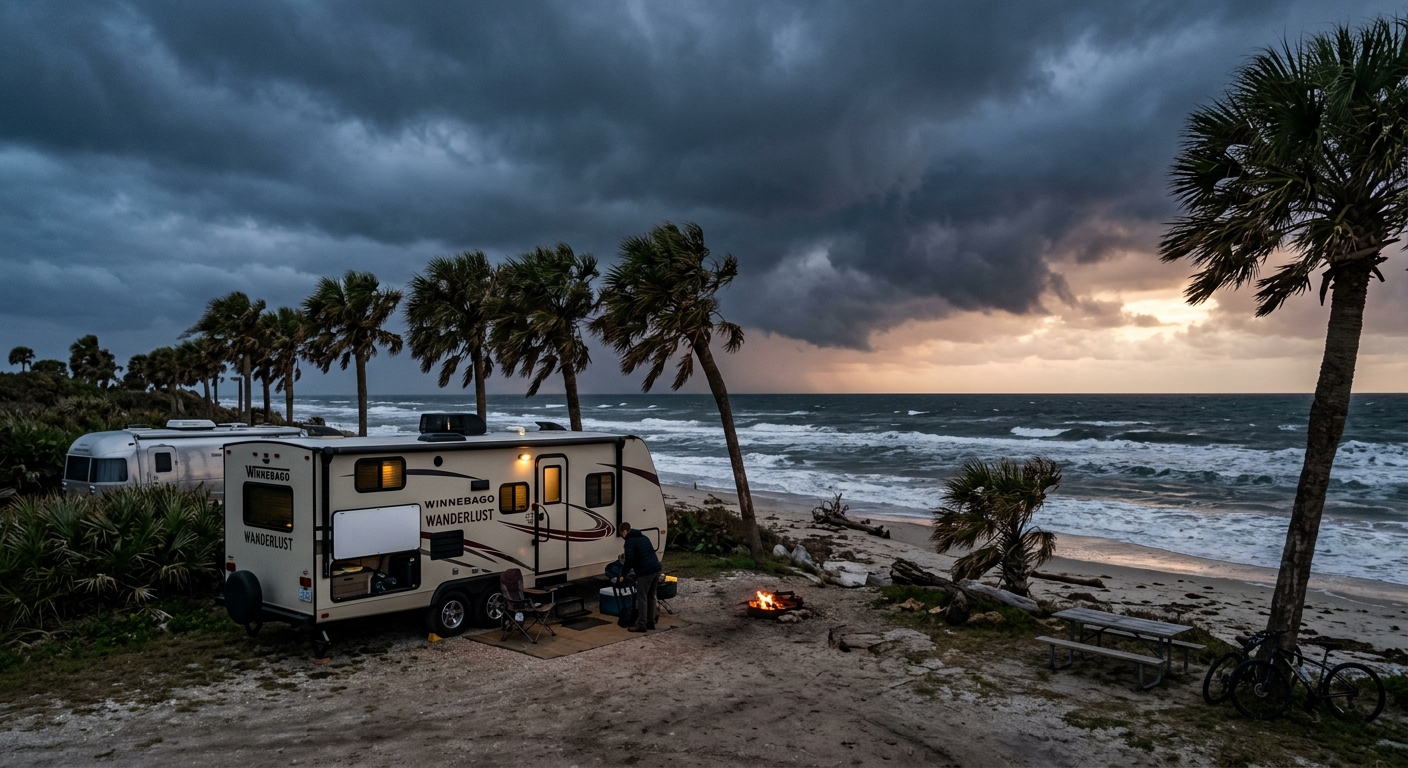
Why Coastal Camping Requires a Different Kind of Preparedness
There's nothing quite like waking up to the sound of waves and salty morning air from your RV or tent. Coastal campgrounds are some of the most breathtaking destinations in North America — but they also come with unique risks that inland campers rarely have to consider. When Gulf County recently ordered evacuations at three RV parks ahead of a threatening storm surge, it served as a powerful reminder: beautiful beachside camping and emergency preparedness must go hand in hand.
Whether you're a full-time RVer, a weekend warrior, or a tent glamper who loves oceanfront sites, knowing how to respond to a coastal storm threat could save your life — and your rig. Here's everything you need to know before you park near the water.
Understand Storm Surge: The Most Dangerous Coastal Threat
Most campers think of high winds as the biggest hurricane or tropical storm danger. In reality, storm surge — the abnormal rise of water driven inland by a storm's winds — is the leading cause of hurricane-related deaths. A surge can push walls of ocean water miles inland within minutes, flooding low-lying campgrounds, RV parks, and barrier island sites with little warning.
Before booking any coastal campground, check its elevation and proximity to the waterline. Many RV parks along the Gulf Coast, Atlantic, and Pacific shores sit just a few feet above sea level, making them especially vulnerable. Use FEMA's Flood Map Service or your state's emergency management website to assess risk zones before you ever hook up your water line.
Steps to Take Before You Even Leave Home
- Research evacuation zones: Look up whether your destination campground falls in a Zone A, B, or C evacuation area. This information is typically available on county emergency management websites.
- Book flexible reservations: Choose campgrounds with lenient cancellation policies, especially during hurricane season (June–November in the Atlantic and Gulf).
- Know your campground's emergency plan: Call ahead and ask staff what their storm protocol looks like. A well-run park will have clear procedures.
- Use CampgroundViews.com to scout your site: Our 360° virtual tours let you see the actual terrain, tree cover, and proximity to water before you arrive — so there are no surprises when the weather turns.
Build Your Coastal Storm Emergency Kit
Every coastal camper — RVer or tent dweller — should have these essentials on hand:
- Battery-powered or hand-crank weather radio (NOAA alerts)
- At least 72 hours of food and fresh water (one gallon per person per day)
- Physical maps of the region (don't rely solely on GPS during emergencies)
- Copies of important documents in a waterproof bag (insurance, ID, campground reservations)
- First aid kit, medications, and a flashlight with extra batteries
- Full fuel tank — always top off when a storm watch is issued
When an Evacuation Order Comes: Move Quickly and Smartly
If local authorities issue an evacuation order like the one in Gulf County, do not wait. RVers sometimes feel their rig gives them flexibility, but a large motorhome or travel trailer is extremely difficult to maneuver in panicked traffic — and impossible to move once flood waters rise. Follow these steps:
- Leave at the first voluntary evacuation advisory — don't wait for a mandatory order.
- Have a pre-planned inland destination — know where you're going before you start driving. Identify campgrounds 100+ miles inland as your backup.
- Disconnect and secure quickly: Practice your hookup and breakdown routine so you can be road-ready in under 30 minutes.
- Follow official evacuation routes — avoid shortcuts that could be flooded or blocked.
After the Storm: Returning Safely
Once evacuation orders are lifted, resist the urge to rush back. Roads may still be flooded, power lines downed, and campground infrastructure damaged. Contact your campground directly before returning, and check local emergency management updates.
At CampgroundViews.com, we're passionate about helping campers find incredible destinations — including stunning coastal spots — with the knowledge to enjoy them safely. Before your next beach camping adventure, explore our virtual tours to find well-situated, safety-conscious campgrounds that you can love for years to come.
The Bottom Line
Coastal camping is one of life's greatest pleasures. A little preparation means you'll spend your energy soaking in sunsets — not scrambling in a storm. Plan smart, stay informed, and always be ready to move when nature says it's time.