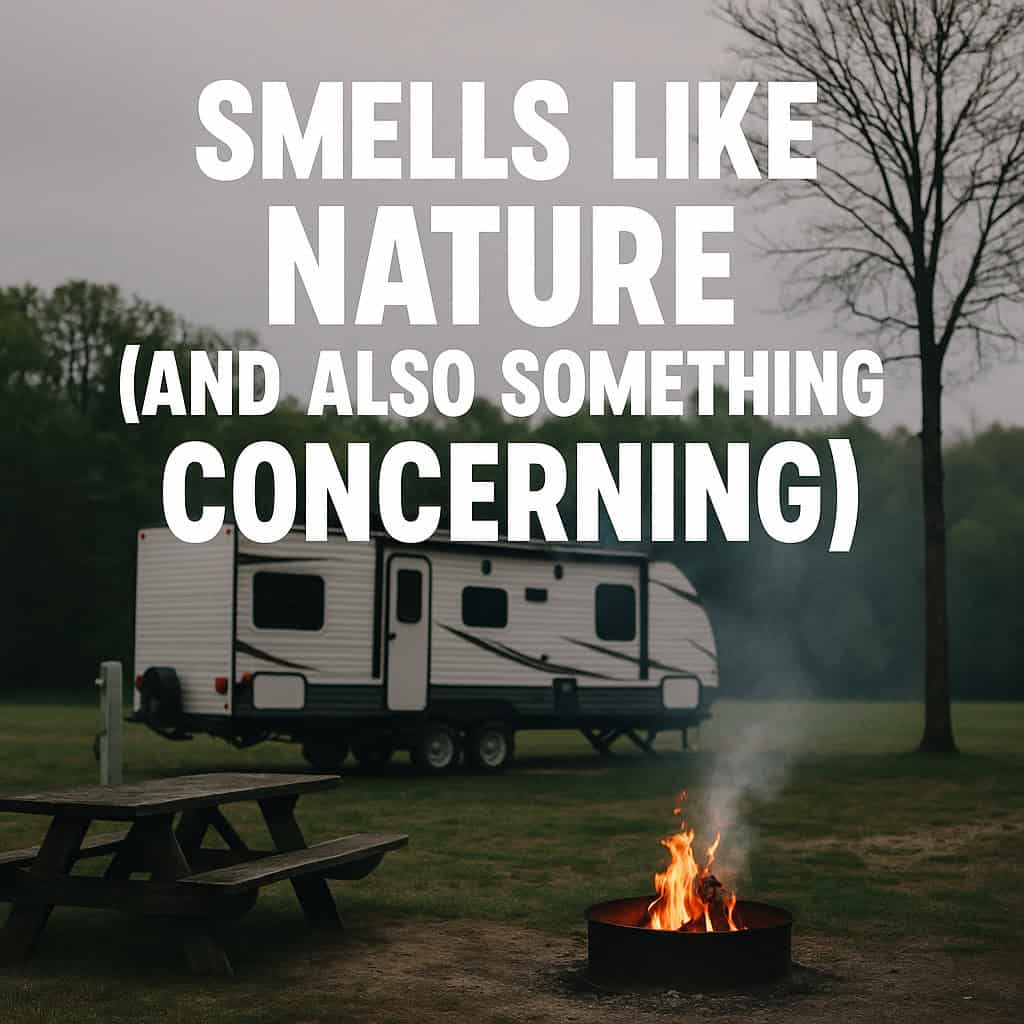
(Because every campground scent profile includes at least one mystery note.)
Camping is supposed to smell amazing. Pine trees. Campfire smoke. Fresh air. Mountain breeze. That crisp “we’re outside” vibe that makes you feel like a better version of yourself.
And then… you smell something else.
Something that doesn’t belong in the woodland fragrance catalogue.
Something that makes you pause mid-step and think:
“Is that… normal?”
Welcome to RV life — where nature smells incredible… and also occasionally smells like a problem.
1) The First Sniff Always Feels Personal
It starts subtle. A little whiff that slips into your day like an awkward comment at a family dinner.
You sniff again to confirm.
Big mistake.
Now your brain is fully online, running diagnostics like a stressed-out mechanic:
-
Propane?
-
Sewer?
-
Electrical?
-
Wet dog?
-
Someone cooking fish at 7 a.m.?
Your peace is gone.
2) Campground Smells Are a Chaotic Buffet
Campgrounds aren’t “fresh air.” They’re a shared ecosystem of scents, including:
-
campfires
-
bug spray
-
damp towels
-
charcoal grills
-
diesel exhaust
-
hot brakes
-
a thousand sun-warmed trash bags
Sometimes it’s charming.
Sometimes it’s a crime scene.
3) The RV Itself Offers Bonus “Notes”
Your rig adds its own special aroma portfolio:
-
the fridge vent smell that’s either “fine” or “very not fine”
-
that faint musty scent that appears after rain
-
sink funk
-
“the tanks are thinking”
-
mystery cabinet mildew
-
the classic “why does it smell like rubber?” moment
Your RV is basically a rolling candle, except the scents are unapproved.
4) The Campfire Smell: Romantic Until It’s On Everything
Campfire smoke is great — until it infiltrates:
-
your bedding
-
your hoodies
-
your hair
-
your clean towels
-
your soul
At a certain point, you’re not “camping.”
You’re just marinating.
5) The Concerning Smell Categories (A Field Guide)
Here are the top “stop and investigate” scent genres:
🔥 Burning / Electrical
Smells like plastic, hot wires, or “toaster oven in panic mode.”
Translation: do not ignore.
🥚 Rotten Egg / Sulphur
Could be propane. Could be something else. Either way: pay attention immediately.
💩 Sewer / Tank Funk
The classic. The legend. The one that makes you question every valve decision you’ve ever made.
🧦 Wet Basement / Musty
Usually shows up after rain or humidity.
Translation: something is damp that shouldn’t be.
6) You Will Do the Walk of Shame Sniff Test
Every RVer eventually does the routine:
-
sniff near the hookups
-
sniff near the fridge vent
-
sniff near the bathroom door
-
sniff the storage bay
-
sniff the truck
-
sniff the neighbour’s air (politely)
You’re not nosy.
You’re conducting a field investigation.
7) And Then It Disappears Like It Never Happened
The worst part?
Sometimes the smell vanishes.
No evidence. No cause. No closure.
Just the emotional damage of not knowing if you imagined it or narrowly avoided disaster.
You go back to your coffee… suspiciously.
Final Thoughts
Camping really does smell like nature — and it’s wonderful.
But RV life also includes the occasional “something concerning” scent that keeps you humble and slightly paranoid.
The goal isn’t to avoid it entirely.
The goal is to master the art of asking:
“Is that normal?”
…and knowing when the answer is: absolutely not.
🐟 Want to reduce surprise campsite stressors before you arrive?
Use Campground Views to preview site spacing, layout, and surroundings — because if you’re going to smell something weird, it helps to know whose rig is closest.