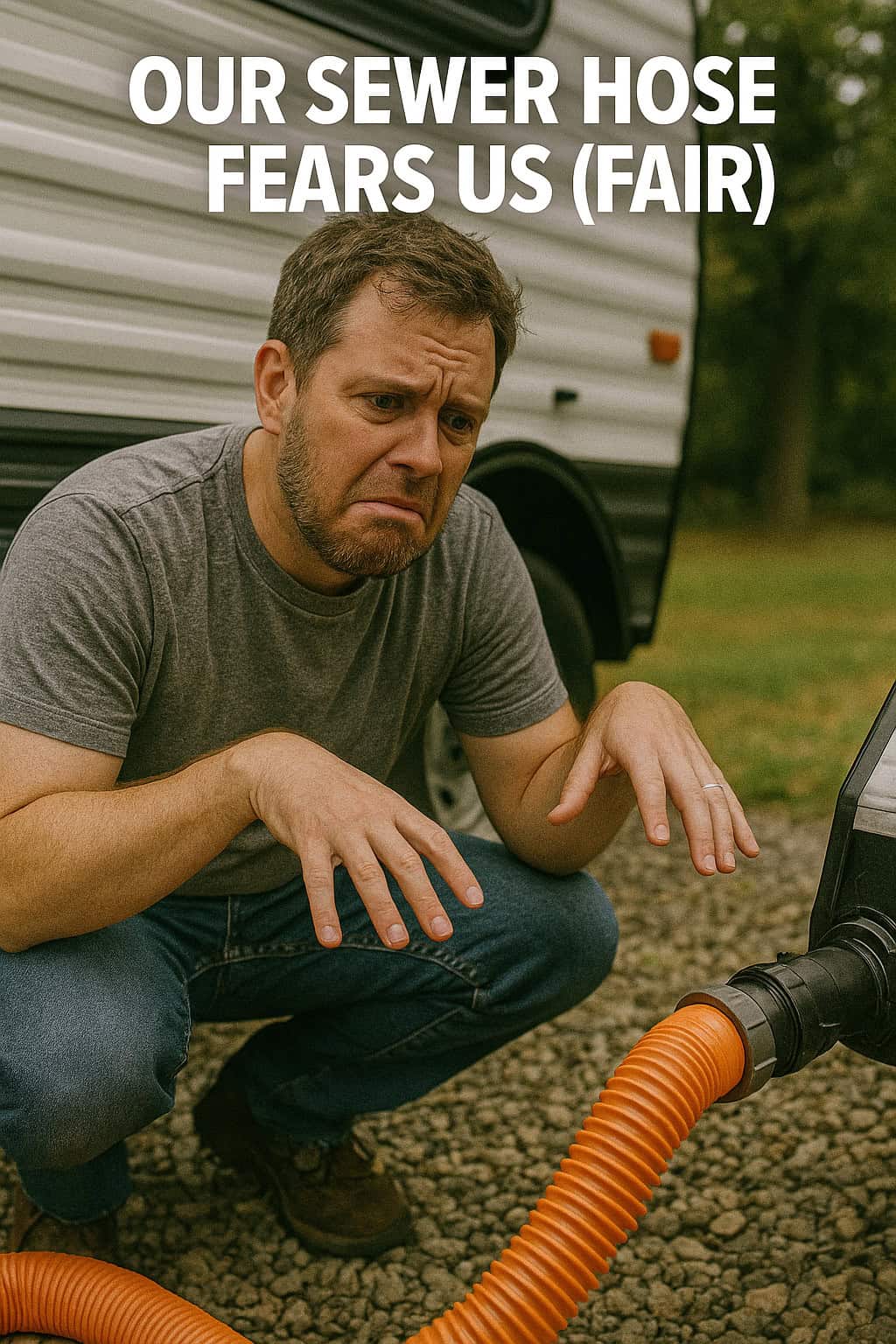
(Because nothing about this relationship is built on trust.)
There are RV systems you tolerate.
There are systems you monitor closely.
And then there’s the sewer hose—the one that knows exactly how fragile your confidence is and chooses violence anyway.
You don’t use a sewer hose.
You approach it cautiously, with gloves, a plan, and the quiet hope that today is not the day it betrays you.
Honestly? If it fears you, that’s probably mutual—and completely justified.
🧤 1. Gloves Are Not Optional. They Are Armor
Anyone who says, “I’ll just do this quickly,” without gloves is either:
-
lying
-
new
-
or about to learn something unforgettable
Gloves aren’t fear. They’re experience.
And if you double-glove? That’s not paranoia—that’s growth.
🪢 2. It Never Twists the Way You Want
You lay it out carefully.
You align the fittings.
You think you’ve beaten physics.
Then the hose:
-
kinks
-
collapses
-
twists into a shape you’ve never seen before
-
refuses to extend one more inch
Sewer hoses don’t follow instructions. They respond only to patience and low expectations.
🚿 3. “Just Crack the Valve” Is a Lie
You never just crack the valve.
You:
-
brace
-
lean away
-
hold your breath
-
open it millimeters at a time
Because once that valve is open, there’s no undo. Only consequences.
If nothing comes out right away?
That’s worse. That’s suspense.
🌊 4. The Slope Is Always Slightly Wrong
Gravity is critical here—and gravity is rarely cooperative.
If the hose isn’t sloped just right:
-
things stall
-
things linger
-
things require… encouragement
You will lift sections of the hose like you’re coaxing information out of it, whispering, “Come on. Let’s finish this.”
👀 5. Eye Contact Is a Mistake
You do not watch the hose too closely.
You monitor it peripherally.
Too much focus invites anxiety.
Too little focus invites disaster.
This is advanced RV skill: aware, but not staring.
🧻 6. The “Rinse and Pray” Phase
Once the tanks are empty, you rinse like your reputation depends on it.
You:
-
flush
-
rinse
-
swirl
-
repeat
Not because you’re obsessive—but because you’d like to store the hose without flinching later.
A clean hose is still suspicious. But it’s a manageable suspicion.
🧼 7. Storage Is Where Respect Is Earned
You don’t just toss a sewer hose anywhere.
It has:
-
its own compartment
-
its own bag
-
its own unspoken rules
It never touches:
-
clean gear
-
food items
-
anything you emotionally care about
Boundaries are healthy. Even here.
😅 8. Dump Station Etiquette Adds Pressure
Doing this with an audience raises the stakes.
You’re trying to:
-
be efficient
-
not block anyone
-
not spill
-
not look like it’s your first time
Meanwhile someone is waiting behind you with crossed arms and expectations.
This is not the time for experimentation. This is execution.
🧠 9. Confidence Comes From Routine, Not Bravery
The calm RVers at the dump station aren’t fearless.
They’re consistent.
They:
-
do it the same way every time
-
follow a set order
-
don’t rush
-
respect the process
That’s how you turn fear into a tolerable working relationship.
💬 Final Thoughts
Your sewer hose doesn’t fear you because you’re careless.
It fears you because you’ve learned.
You respect it. You don’t rush it. You don’t trust it blindly.
And that mutual understanding keeps things… mostly under control.
It’s not glamorous.
It’s not fun.
But when it goes smoothly? That’s a quiet victory worth celebrating.
🐟 Want to reduce dump-day stress before you even arrive? Use Campground Views to preview site layouts, dump station access, spacing, and approach angles—so you’re not navigating sewer logistics in a traffic jam of judgement.
🔗 Follow us for more RV life truths, system survival tips, and humor forged in the least glamorous corners of camping.