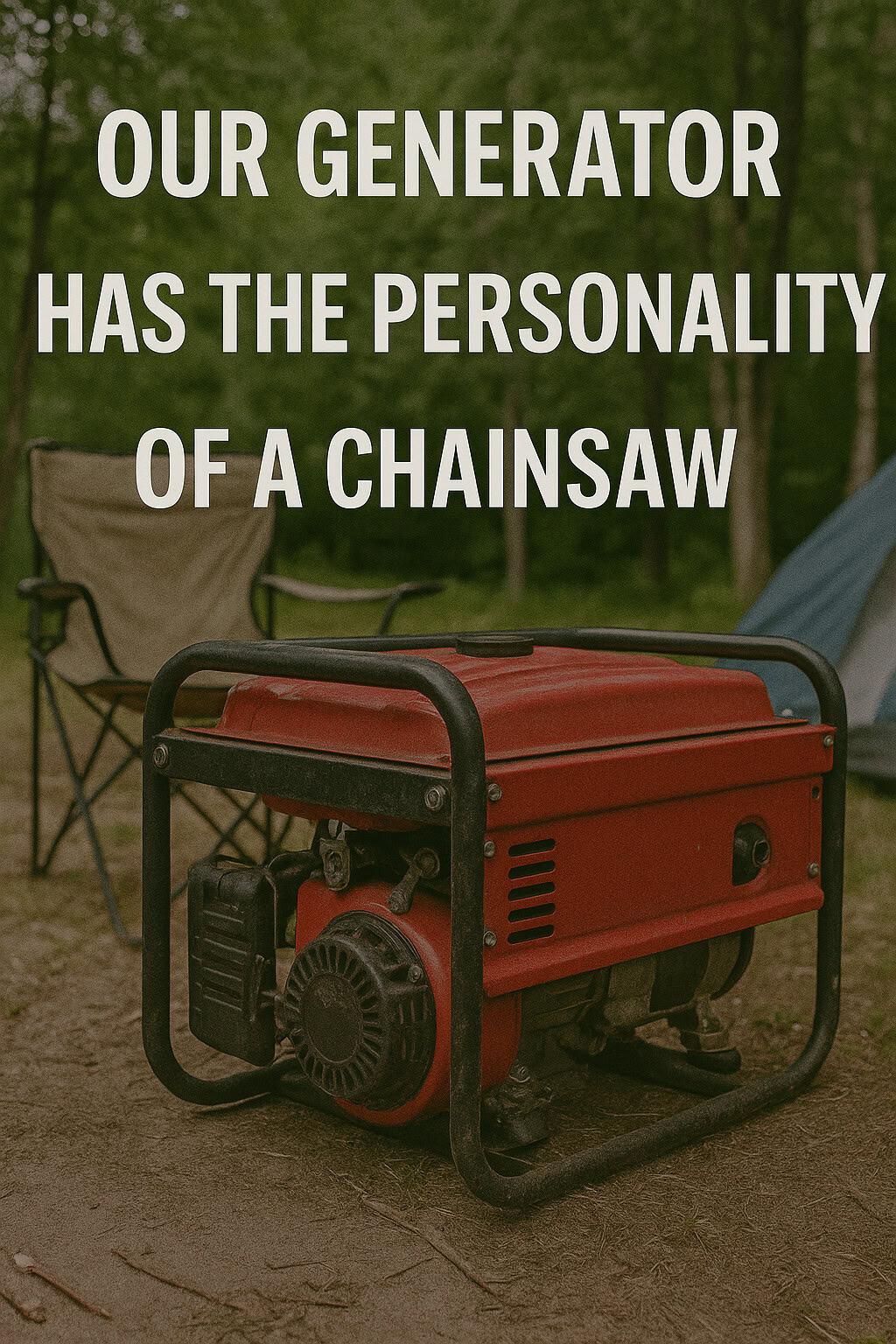
(Loud, dramatic, and strangely confident about it.)
You know the type. You fire it up and suddenly your peaceful campsite sounds like a logging competition.
It’s not just noise—it’s presence.
It doesn’t “run.” It announces itself.
And the moment it starts, you can feel your neighbors collectively thinking, “Oh. It’s going to be that kind of evening.”
Here’s how to live with a generator that has main-character energy—without turning your trip into a noise complaint speed run.
🔊 1. Accept the Truth: Some Generators Are Not “Quiet”
If yours is the classic open-frame “worksite vibe,” it’s going to sound aggressive.
That doesn’t mean you’re a villain—it just means you need a strategy.
The goal isn’t silence. It’s: less chaos, better etiquette, smarter use.
🕒 2. Run It Like a Civilized Human (Generator Hours Matter)
Even if your campground doesn’t post strict quiet hours, campers do.
Best practice:
-
run it mid-morning or late afternoon
-
avoid early mornings and dinner time
-
shut it down well before quiet hours
Nothing ruins someone’s camp coffee like your generator screaming through the trees.
🧭 3. Placement Is Everything (Sound Travels Like Gossip)
Where you set it up changes everything.
-
place it as far from other sites as your cord safely allows
-
aim the exhaust away from people, doors, and windows
-
use your RV as a sound barrier when possible
-
keep it on stable ground so it doesn’t vibrate itself into another dimension
Pro tip: if you can hear it loudly inside your RV, your neighbors can hear it loudly in their dreams.
🧱 4. Vibration Is Half the “Chainsaw Effect”
Sometimes the noise isn’t just the engine—it’s the rattling. Easy fixes:
-
place it on a rubber mat or thick board (stable + reduces vibration)
-
ensure nothing is touching it (chairs, bins, the universe)
-
secure loose panels/covers if your model has them
Less rattle = less rage.
🛠 5. Maintenance Makes It Less Dramatic
A generator in a bad mood is usually one that needs attention:
-
dirty air filter
-
old oil
-
loose bolts
-
dodgy spark plug
-
stale fuel
No, it won’t turn into a whisper. But it might stop sounding like it’s trying to fight you.
⚡ 6. Use It for Bursts, Not as Background Noise
Generators are best used like a tool, not an ambience playlist. Run it to:
-
top off batteries
-
power a high-draw appliance briefly
-
get the job done, then shut it down
If you leave it running “just in case,” you’ll create noise for no benefit—and that’s how generator resentment is born.
🧊 7. Manage Power Needs So You Don’t Need It as Much
A little planning reduces runtime:
-
charge devices while it’s already on
-
pre-cool the fridge if possible
-
run big loads in one block (not all day in little bits)
-
use low-power alternatives for lighting and small devices
This isn’t about suffering. It’s about avoiding unnecessary chainsaw hours.
🤝 8. The Etiquette Rule: Don’t Surprise People
If you’re in a tight loop and you know it’s going to be loud:
-
start it at a reasonable time
-
keep it short
-
be visibly considerate (it matters)
You’d be amazed how much goodwill you earn by making it clear you’re not thrilled about the noise either.
💬 Final Thoughts
Your generator might have the personality of a chainsaw…
but you don’t have to run it like one.
With smart timing, better placement, reduced vibration, and shorter “power bursts,” you can keep your rig functional and your campsite vibe intact.
Because camping is supposed to sound like birds, wind, and distant laughter—
not a man building a deck at 7 a.m.
🐟 Want to pick a site where generator use is less awkward—more spacing, better layout, and fewer “everyone can hear you” angles? Use Campground Views to preview campsite spacing, terrain, and setup realities before you book.
🔗 Follow us for more RV life truths, off-grid survival tips, and practical hacks that keep the peace (and your power on).