The Secret to Keeping Your Food Cold (and Your Fridge Running Smoothly!)
If you’ve ever reached into your RV fridge and found warm milk, half-frozen lettuce, or a funky smell, you might think it’s a faulty fridge or bad cooling system. But in many cases, the real culprit is something much simpler—your RV isn’t level.
Unlike residential refrigerators, most RV fridges need to be on a level surface to work properly. If not, they can lose efficiency, break down, or even become a fire hazard over time.
Let’s break down why leveling matters, what happens if you ignore it, and how to fix it before your next trip.
❄️ How RV Refrigerators Work (And Why They Need Leveling)
Most RVs come with absorption refrigerators, which work differently than your home fridge.
🧊 What Makes RV Fridges Unique?
✔ Instead of a compressor, they use a heating element and chemical reactions to cool.
✔ They rely on gravity to move coolant through the system.
✔ If they aren’t level, the coolant gets stuck, reducing cooling power.
🚐 Compressor vs. Absorption Refrigerators
There are two types of RV fridges:
| Feature | Absorption Fridge (Propane/Electric) | Compressor Fridge (12V/DC) |
|---|---|---|
| Needs to Be Level? | Yes! | No |
| Cooling Method | Chemical reaction + heat | Compressor (like a home fridge) |
| Power Source | Runs on propane & electric | Runs on 12V or shore power |
| Best For | Off-grid camping, propane use | More stable cooling, solar-friendly |
If you have a propane/electric fridge, you MUST level your RV. If you have a 12V compressor fridge, you’re off the hook!
🚨 What Happens If Your RV Fridge Isn’t Level?
1. Your Fridge Won’t Stay Cold
🚫 Uneven coolant flow = weak cooling power
🚫 Food warms up = spoiled groceries & wasted money
🚫 The fridge struggles, working harder than it should
2. Permanent Damage to Your Cooling System
If left unlevel for too long:
⚠️ The coolant stops circulating, creating blockages.
⚠️ Rust builds up, clogging the system permanently.
⚠️ Eventually, the fridge fails completely.
And here’s the bad news:
❌ Once a blockage forms, it’s nearly impossible to fix.
❌ You’ll need a costly fridge replacement—and RV fridges aren’t cheap!
3. Fire Risk (Yes, Really!)
🔥 If coolant stops flowing, it can overheat the heating element.
🔥 Over time, this can cause a fire risk inside your RV.
🔥 Some older models have even caught fire due to overheating issues.
The fix? Keep your RV level and avoid the risk altogether.
📏 How to Check If Your RV is Level
✅ Use These Quick Tests:
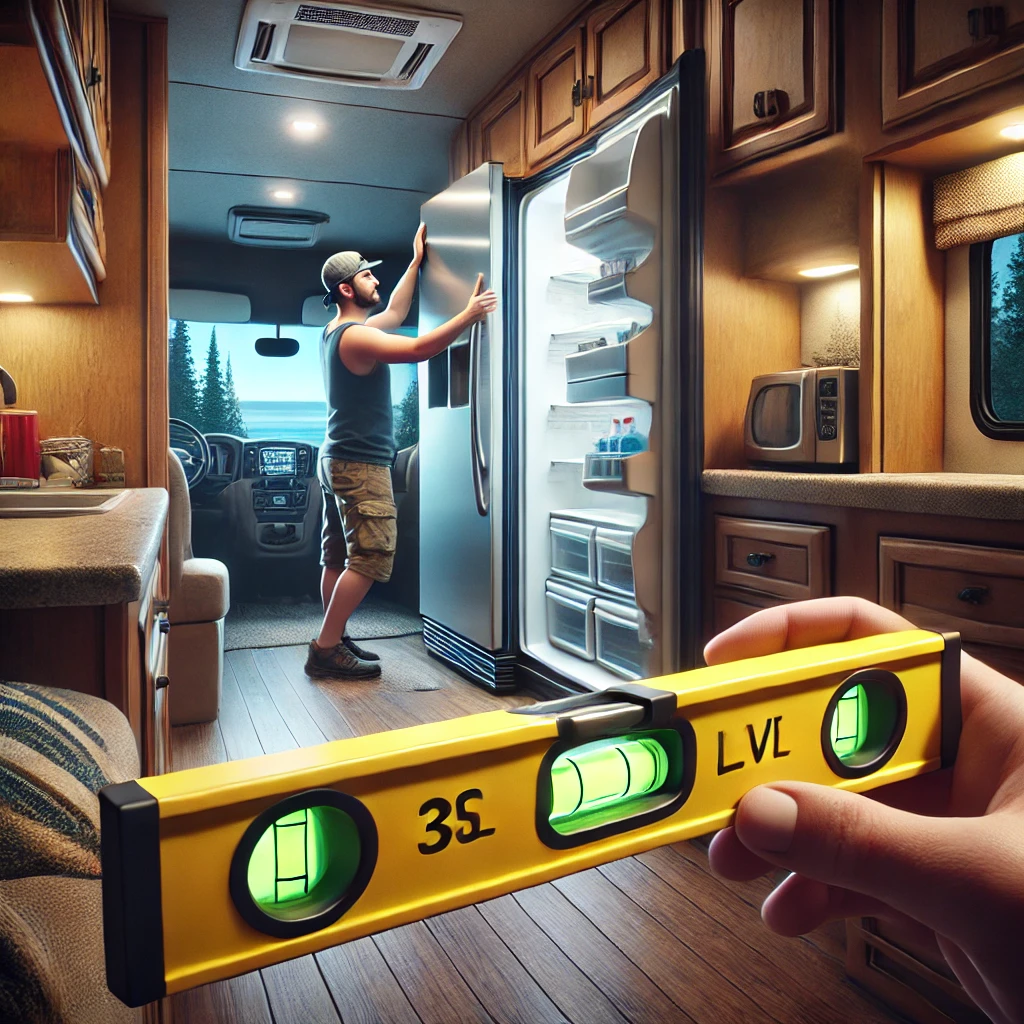
✔ Bubble Level Method – Place a bubble level inside the fridge and on the floor.
✔ Door Swing Test – If your fridge door swings open or shut too fast, you’re off-level.
✔ The “Egg Test” – Set an egg on the counter. If it rolls, your RV isn’t level.
How Level Should You Be?
📏 Your RV should be within 3° side-to-side and 6° front-to-back for your fridge to work properly.
🔧 How to Level Your RV for a Healthy Fridge
🚐 Step 1: Pick a Good Campsite
✅ Look for flat, even ground—avoid sloped or soft sites.
✅ Use CampgroundViews.com to see sites before booking!
🛠 Step 2: Level Side-to-Side First
✅ Use leveling blocks or ramps under the tires.
✅ If boondocking, use natural terrain (but avoid low spots).
📏 Step 3: Adjust Front-to-Back
✅ Use the tongue jack (for trailers) or leveling jacks (for motorhomes).
✅ Don’t rely only on stabilizer jacks—they aren’t meant for leveling!
🧊 Step 4: Recheck the Fridge After Setup
✅ Place a bubble level inside the fridge.
✅ Make small adjustments if needed.
🔄 Alternatives: What If You Can’t Get Perfectly Level?
If you can’t get fully level, you still have options:
✔ Turn the fridge off when parked on uneven ground (avoid long-term damage).
✔ Switch to a 12V compressor fridge (they don’t require leveling).
✔ Use a portable cooler for short stops to keep food fresh.
🚐 If you’re stopping overnight at a tilted site, try to park so the fridge is at the highest point.
🔑 The Bottom Line: Level Your RV, Protect Your Fridge
Your RV fridge isn’t like your home fridge—it needs a level surface to stay cold and work properly.
✔ Check your level before every trip.
✔ Avoid unlevel parking for long periods.
✔ Use leveling blocks, jacks, or natural terrain to correct sloping.
✔ Switch to a compressor fridge if you want to avoid leveling issues.
🚐 Want to see if a campsite is level before you book? Take a 360-degree virtual tour at CampgroundViews.com and pick the perfect site for your fridge—and your comfort!