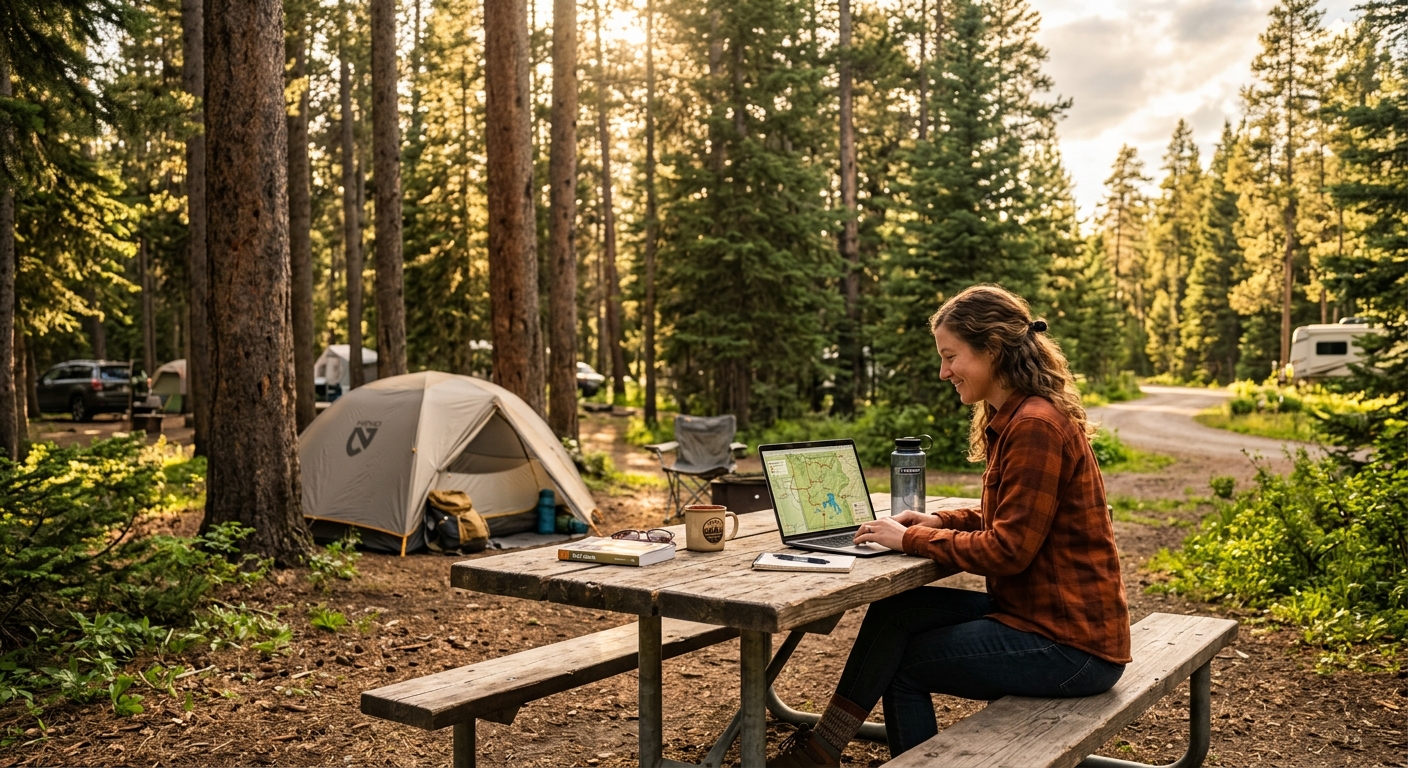
The NPS Is a Goldmine — But It's Only the Starting Point
If you've ever visited the National Park Service website to plan a camping trip, you already know it's packed with useful information — reservation windows, permit requirements, fee schedules, and ranger program schedules. But here's what many campers don't realize: the NPS is just one piece of the puzzle. Smart campers layer NPS resources with real-world insights from fellow travelers to build truly unforgettable trips. Let's break down exactly how to do that.
What the NPS Website Does Really Well
Give credit where it's due — the National Park Service website (nps.gov) is one of the most comprehensive government resources available to outdoor enthusiasts. Here's what you should always check there first:
- Camping reservations and availability: Most NPS campgrounds book through Recreation.gov. The NPS site links directly to reservation windows so you never miss that critical booking date.
- Permit requirements: Popular destinations like Zion's Angels Landing or the permit-required zones of Yosemite Valley are clearly outlined, including lottery dates and quotas.
- Leave No Trace guidelines: Each park's specific rules around campfires, food storage, and waste management are detailed per location — not just generic advice.
- Alerts and closures: Wildfire smoke, trail washouts, and seasonal road closures are updated in near real-time, which can save your trip before it starts.
- Fee structures: Annual passes like the America the Beautiful Pass are prominently featured, and understanding entrance fees helps you budget correctly.
Where Official Information Has Its Limits
Here's the honest truth: government websites are built for accuracy and compliance, not for storytelling or nuanced traveler experience. What the NPS can't tell you is whether Site 14 at a particular campground gets hammered by wind every night, or whether the camp host at Loop B is incredibly helpful and knows secret fishing spots. That kind of on-the-ground intelligence comes from the camping community itself.
This is exactly where platforms like CampgroundViews.com fill in the gaps beautifully. With 28,000+ campgrounds across North America and over 3,600 virtual tours, CampgroundViews lets you actually see what a campground looks like before you commit. You can scout individual sites, check out the proximity to bathrooms, and get a feel for how crowded or peaceful a location truly feels — all before you pack a single sleeping bag.
The Smart Camper's Planning Stack
The best-prepared campers we know use a layered approach to trip planning. Here's a simple framework you can adopt right now:
Step 1: Start with NPS for the Official Framework
Visit nps.gov for your destination. Bookmark the alerts page, note the reservation opening dates on your calendar, and download the park map. This is your foundation.
Step 2: Tour Campgrounds Virtually on CampgroundViews.com
Before committing to a campground, browse CampgroundViews.com to take a virtual tour. Being able to see sight lines, terrain, and campground layout transforms abstract reservation data into a genuine decision you feel confident about.
Step 3: Check Recent Traveler Reports
Community reviews and recent trip reports on camping forums and apps give you seasonal conditions that even the best government website can't provide in real time. Has there been an unusual amount of mosquitoes this spring? Is the water at the pump station actually running? Fellow campers know.
Step 4: Build Your Backup Plan
National parks are stunning, but they're also increasingly competitive to book. Always identify two or three alternative campgrounds — including state parks, national forests, and privately operated sites — so a failed reservation doesn't derail your vacation. CampgroundViews.com makes this easy by letting you explore thousands of alternatives by region.
Don't Forget the Hidden Gems Near National Parks
Some of the most spectacular camping experiences happen just outside park boundaries. National Forest Service land adjacent to popular parks often allows dispersed camping, features less crowded trails, and requires nothing more than a basic free permit in many cases. These spots rarely make it onto the NPS website — but they absolutely show up on CampgroundViews.com.
The bottom line? Use every tool available to you. The NPS gives you the rules of the road. CampgroundViews.com shows you the road itself. Together, they make you an unstoppable camping planner.