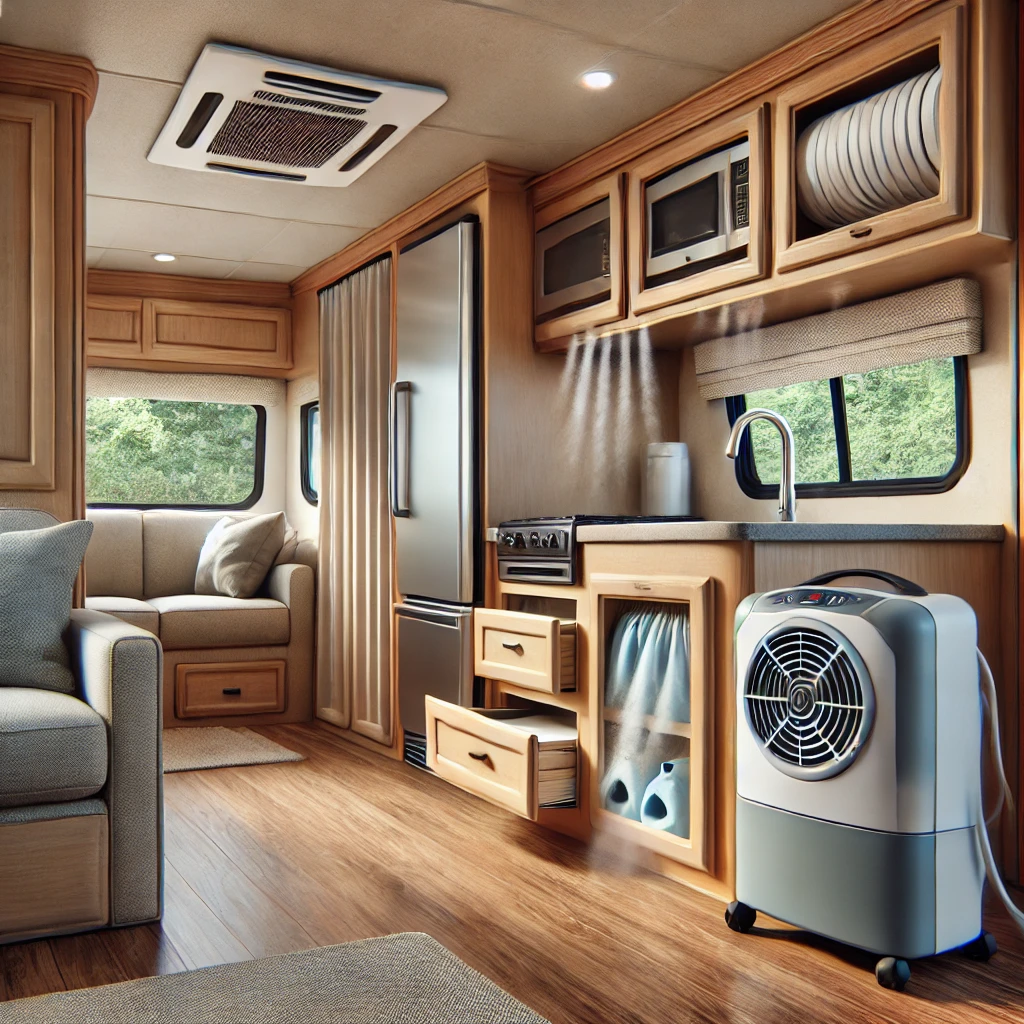
Keep Your RV Dry, Fresh, and Mold-Free!
Moisture is one of the biggest threats to an RV’s interior. Unlike a traditional house, an RV is smaller, more enclosed, and constantly exposed to temperature changes—all of which can lead to condensation, leaks, and mold growth.
But don’t worry! With smart habits and the right tools, you can prevent mold and moisture problems before they start. Here’s how to keep your RV dry, fresh, and mold-free all year long. 🚐✨
🌫️ 1. Control Humidity Levels (Your First Line of Defense!)
Why It Matters:
🔹 Excess moisture = mold, mildew, and musty smells.
🔹 Ideal humidity for RVs: 30-50% (higher than 60% = mold risk).
How to Keep Humidity in Check:
✔ Use a dehumidifier – A small portable dehumidifier can pull excess moisture from the air.
✔ Ventilate your RV – Open windows & vents to increase airflow.
✔ Run exhaust fans when cooking & showering – Moisture builds up fast in small spaces!
✔ Use moisture absorbers (like DampRid or silica gel packs) in cabinets & closets.
🌟 Pro Tip: If you notice condensation on windows or walls, that’s a sign your humidity is too high!
🚿 2. Stop Condensation Before It Becomes a Problem
Why It Matters:
🔹 Condensation = moisture buildup that leads to hidden mold.
🔹 It forms when warm, humid air hits cold surfaces (windows, walls, cabinets).
How to Prevent Condensation:
✔ Wipe down windows & walls when condensation forms.
✔ Use thermal or insulated window covers to reduce cold surfaces.
✔ Crack a window at night (especially in winter) to improve air circulation.
✔ Keep cabinet doors slightly open to let air circulate inside.
🌟 Pro Tip: If your RV has single-pane windows, consider upgrading to double-pane or using insulated window film to reduce condensation.
🏠 3. Seal & Check for Leaks (Water Damage = Mold!)
Why It Matters:
🔹 Even a small leak can lead to hidden mold growth inside walls and floors.
🔹 Water damage weakens your RV structure and creates musty smells.
How to Prevent Water Leaks:
✔ Inspect roof seams & windows for cracks or worn-out sealant.
✔ Re-seal seams & edges with RV-safe sealant annually.
✔ Check plumbing lines under sinks & behind appliances for slow leaks.
✔ Look for soft spots on the floor or walls—a sign of hidden moisture damage.
🌟 Pro Tip: Use Dicor self-leveling sealant for roof leaks and Eternabond tape for long-lasting waterproofing!
🛁 4. Dry Out the Bathroom (One of the Dampest Areas!)
Why It Matters:
🔹 Showers create tons of humidity, which lingers if not ventilated.
🔹 Bathrooms are prime spots for mold growth.
How to Keep Your RV Bathroom Dry:
✔ Run the exhaust fan during & after showers (or crack a window).
✔ Wipe down the shower walls after each use.
✔ Use a squeegee to remove excess water from shower walls & doors.
✔ Keep the bathroom door open when not in use to improve airflow.
🌟 Pro Tip: Install a shower skylight or vent cover to let moisture escape faster!
🛏️ 5. Protect Soft Surfaces & Mattresses
Why It Matters:
🔹 Fabric, cushions, and mattresses trap moisture, which leads to musty odors and mold.
🔹 RV beds are often on cold surfaces, making them prone to condensation.
How to Prevent Mold in RV Beds & Upholstery:
✔ Use a breathable mattress cover to block moisture.
✔ Raise the mattress slightly (place wooden slats underneath) to allow airflow.
✔ Store bedding in vacuum-sealed bags when not in use.
✔ Wash cushions, curtains, and rugs regularly to prevent mildew buildup.
🌟 Pro Tip: If you find moisture under your mattress, try using Hypervent Aeration Matting to improve airflow!
🍽️ 6. Keep the Kitchen Dry & Ventilated
Why It Matters:
🔹 Cooking produces steam, which raises humidity levels.
🔹 A damp kitchen = musty cabinets, moldy food, and water damage.
How to Keep Your Kitchen Moisture-Free:
✔ Run the stove vent or open a window while cooking.
✔ Wipe up spills & steam buildup immediately.
✔ Use moisture-absorbing packets inside pantry & food storage.
✔ Check under the sink for leaks regularly.
🌟 Pro Tip: When boiling water, keep lids on pots to reduce steam in the air!
🛠️ 7. Prevent Mold in Storage Compartments & Closets
Why It Matters:
🔹 Closed storage spaces trap moisture, making them a breeding ground for mold.
🔹 Outdoor compartments are especially prone to humidity buildup.
How to Prevent Mold in Storage Areas:
✔ Use vented storage bins instead of plastic totes (traps less moisture).
✔ Keep closet doors slightly open for better airflow.
✔ Place silica gel packets or DampRid inside cabinets & storage areas.
✔ Store shoes & jackets outside if they’re wet or damp.
🌟 Pro Tip: Air out your RV storage compartments every few weeks to prevent stale air buildup!
🔥 8. Use Heat Wisely in Cold Weather
Why It Matters:
🔹 Using propane heaters without ventilation can increase condensation.
🔹 Proper heating prevents cold surfaces that attract moisture.
How to Stay Warm Without Causing Moisture Buildup:
✔ Use an electric space heater instead of propane indoors.
✔ Crack a window slightly when using propane heaters.
✔ Insulate your RV with Reflectix to reduce temperature differences.
✔ Use a dehumidifier in winter to combat extra moisture from heating.
🌟 Pro Tip: Avoid drying wet clothes inside your RV—hang them outside to prevent excess moisture!
🚀 Final Thoughts: Keep Your RV Mold-Free & Fresh!
Moisture is a silent enemy in RV life, but with smart prevention, you can keep your RV dry, fresh, and mold-free.
✔ Control humidity with ventilation & dehumidifiers.
✔ Wipe down condensation before it turns into mold.
✔ Seal leaks & inspect seams regularly.
✔ Keep soft surfaces dry & well-ventilated.
✔ Use proper airflow in kitchens, bathrooms, and storage areas.
🚐✨ Have you battled RV mold or moisture issues? Share your best tips in the comments!