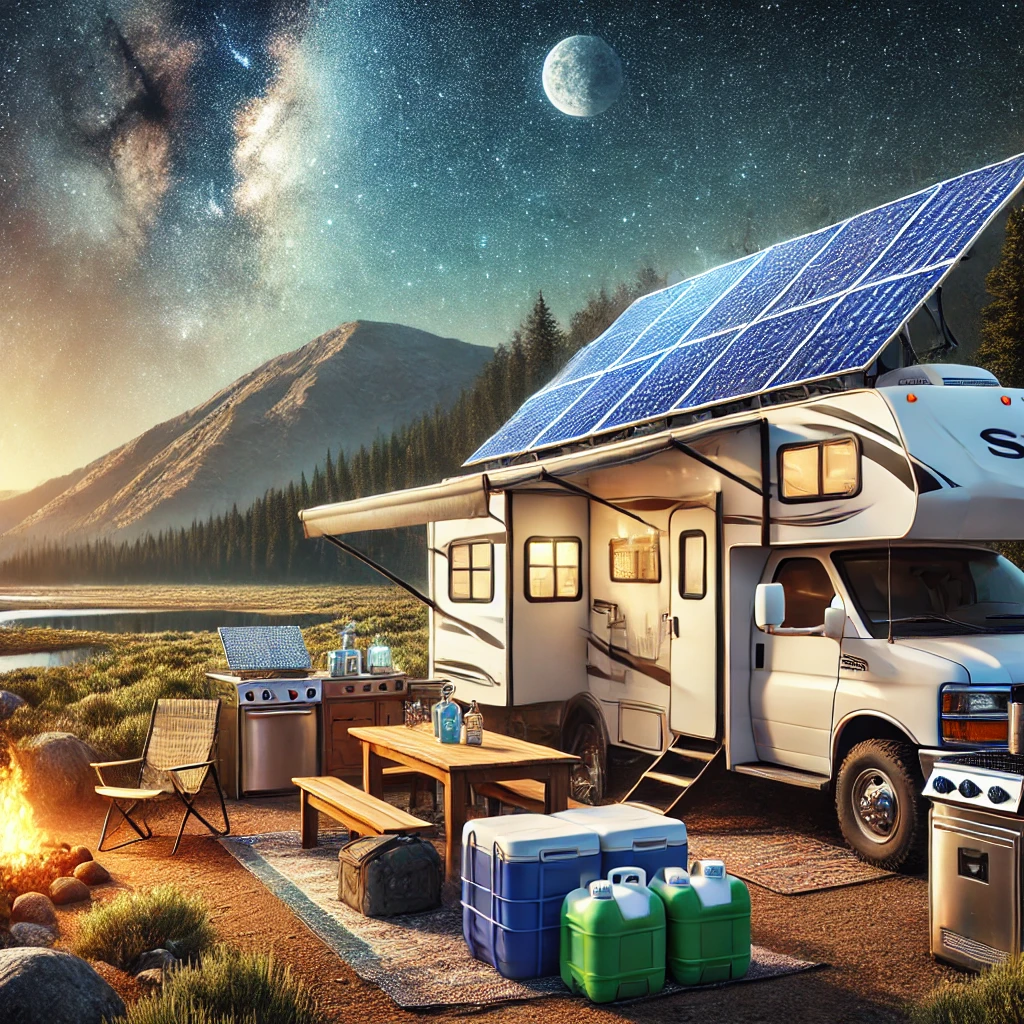
Mastering Boondocking and Off-Grid RV Camping Like a Pro
Camping without hookups—also known as boondocking, dry camping, or off-grid camping—is one of the best ways to experience true freedom on the road. No crowded campgrounds, no noisy neighbors—just you, nature, and your RV.
But to make it work, you need to conserve resources, plan ahead, and make smart choices. Whether you’re new to off-grid camping or a seasoned boondocker, here’s how to manage water, power, waste, and food while enjoying the great outdoors. 🚐🌿✨
💧 1. Managing Water: Every Drop Counts
Without a water hookup, you’ll need to bring your own water and conserve it wisely.
How to Stretch Your Freshwater Supply:
✔ Fill your fresh water tank before heading off-grid.
✔ Use a collapsible water container for extra storage (5-10 gallons).
✔ Turn off the tap when soaping up or brushing your teeth.
✔ Take “navy showers” – rinse, turn off water, soap up, then rinse quickly.
✔ Wash dishes with minimal water – wipe off food before washing, and use a spray bottle for rinsing.
Refilling Fresh Water While Boondocking:
✔ Campgrounds & RV parks often allow water fills for a small fee.
✔ Rest stops, truck stops, and gas stations sometimes have potable water.
✔ National forests & public lands may have water spigots at ranger stations.
✔ Water filtration systems let you safely use water from streams or lakes.
🌟 Pro Tip: Use biodegradable soap to protect nature if you’re washing outdoors!
🔋 2. Powering Your RV Without Hookups
Your RV needs power for lights, appliances, and charging devices. Without shore power, you’ll need alternative sources of energy.
Best Off-Grid Power Options:
✔ Solar Panels – A must-have for boondockers! Provides free, renewable power.
✔ Generator – A gas-powered option for backup energy (but can be noisy).
✔ Lithium or Deep Cycle Batteries – Store power from solar or generator use.
✔ Power Inverter – Converts battery power to AC power for appliances.
How to Conserve Power While Off-Grid:
✔ Use LED lights – They draw less power than standard bulbs.
✔ Run appliances on propane instead of electricity.
✔ Turn off devices when not in use.
✔ Charge electronics during the day when solar panels are most effective.
✔ Limit use of AC and high-energy appliances.
🌟 Pro Tip: If you rely on solar, park in full sun during the day for max power storage!
♻️ 3. Managing Waste: Dump Tanks & Trash Smartly
Without sewer hookups, you’ll need to manage wastewater and trash responsibly.
How to Handle Gray Water (Sink & Shower Waste):
✔ Use biodegradable soaps to minimize environmental impact.
✔ Limit dishwashing & showers to reduce gray tank fill-up.
✔ Drain gray water responsibly – Some public lands allow it if using biodegradable soap (always check local rules!).
How to Handle Black Water (Toilet Waste):
✔ Use an RV-friendly portable waste tank if you need extra capacity.
✔ Find a dump station before your tanks fill up – Use apps like Sanidumps or Campendium to locate one.
✔ Compost toilets are a great alternative to black tanks.
Trash & Recycling Tips:
✔ Pack out all trash – Never leave garbage at a campsite.
✔ Separate recyclables and dispose of them properly.
✔ Burn paper waste (safely) in a fire pit to reduce trash volume.
✔ Use reusable containers & biodegradable products to cut down on waste.
🌟 Pro Tip: Always carry extra trash bags—you’ll generate more waste than you expect!
🔥 4. Cooking & Staying Fed Off-Grid
Without an electric hookup, cooking off-grid requires alternative methods and smart meal planning.
Best Off-Grid Cooking Methods:
✔ Propane stove or grill – Ideal for cooking without electricity.
✔ Cast iron over a campfire – Perfect for rustic meals.
✔ Solar oven – Uses the sun’s heat to cook food.
✔ Portable butane or alcohol stoves – Great for backup cooking.
Food Storage Without Hookups:
✔ Use a propane-powered fridge to keep food fresh.
✔ Bring shelf-stable foods like canned goods, pasta, and dry snacks.
✔ Freeze meals ahead of time to keep your fridge cool longer.
✔ Use a high-quality cooler with ice packs for extra storage.
🌟 Pro Tip: Cook in batches and store leftovers to minimize dishwashing!
🔦 5. Lighting & Staying Safe in the Dark
Without campground lights, off-grid nights get very dark—you’ll need good lighting and security measures.
Best Off-Grid Lighting Options:
✔ Battery-powered LED lanterns & string lights for a cozy campsite.
✔ Solar-powered path lights to illuminate the area at night.
✔ Headlamps & flashlights for nighttime walking and cooking.
How to Stay Safe While Camping Off-Grid:
✔ Park in a level, well-drained area to avoid getting stuck.
✔ Keep bear spray or deterrents in wildlife-heavy regions.
✔ Let someone know your location before heading off-grid.
✔ Use motion sensor lights around your RV for security.
🌟 Pro Tip: A whistle or air horn can scare off animals or alert others in an emergency!
📶 6. Staying Connected Without Wi-Fi or Cell Service
Many off-grid areas lack reliable cell service, so plan ahead.
Best Off-Grid Internet Solutions:
✔ Cell signal boosters (like WeBoost) – Amplify weak signals.
✔ Starlink RV or satellite internet – Reliable but expensive.
✔ Offline GPS apps (like Gaia GPS or Maps.me) – Navigate without data.
✔ Pre-download maps, music, and entertainment before heading off-grid.
🌟 Pro Tip: Keep a paper map and compass as a backup—technology isn’t foolproof!
🚀 Final Thoughts: Enjoy the Freedom of Off-Grid Camping!
Camping without hookups is an adventure—but it requires planning, conservation, and smart resource management. With the right gear and strategies, you can enjoy days (or weeks!) off-grid without running out of water, power, or supplies.
✔ Conserve water with smart usage & refill strategies.
✔ Use solar, generators, or batteries for off-grid power.
✔ Manage waste responsibly with portable solutions.
✔ Cook with propane or campfire methods.
✔ Stay safe with lighting, security, and emergency plans.
✔ Plan for limited cell service & navigation.
🚐✨ Are you an off-grid camper? Share your best boondocking tips in the comments!