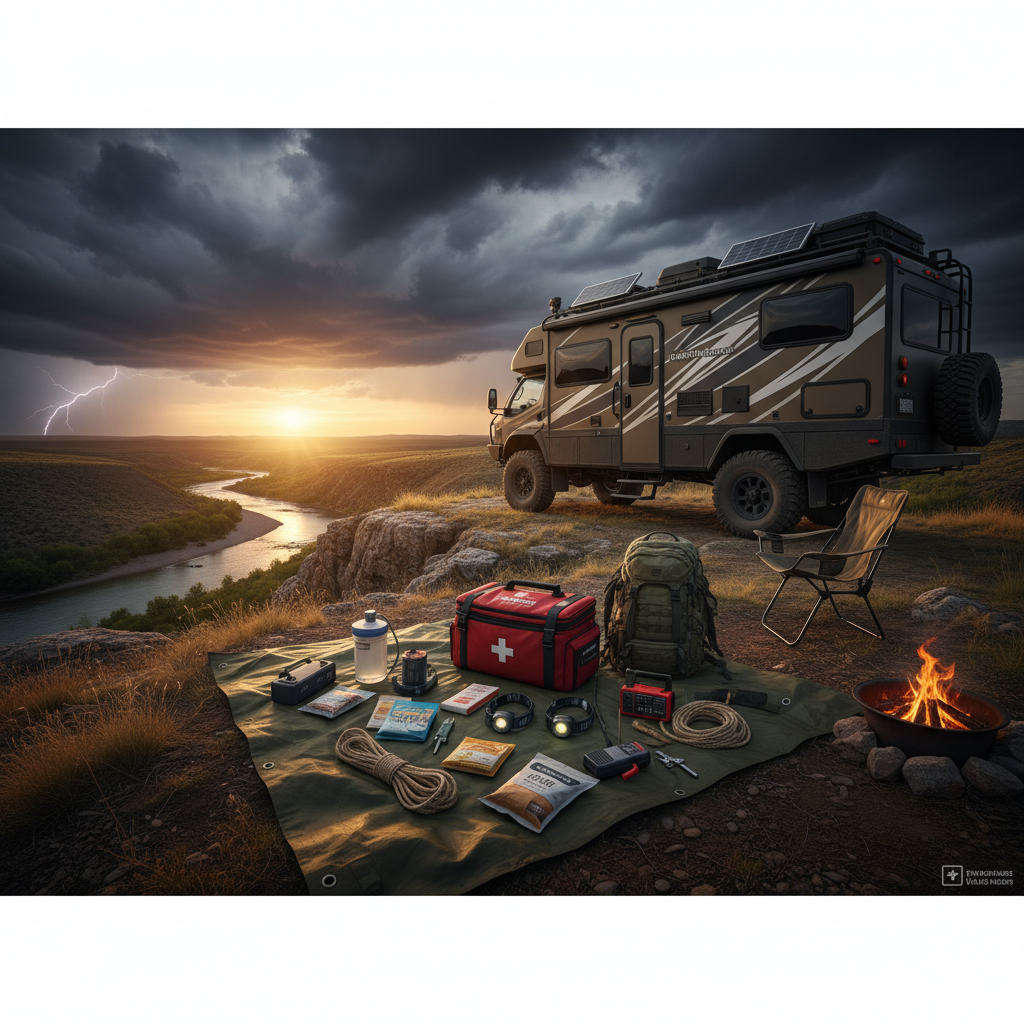
When Rising Water Becomes a Real Threat: Gear Up Before You Go
Recent flood evacuations at two Georgetown, Texas RV parks serve as a sobering reminder that nature doesn't always follow our camping itinerary. When water levels rise fast, being prepared isn't just about saving your gear — it's about keeping your family safe. Whether you're a full-time RVer or a weekend warrior, having the right flood-readiness gear on board is one of the smartest investments you can make before your next trip.
At CampgroundViews.com, we help campers research and virtually tour campgrounds before they ever leave home — including checking out terrain, proximity to rivers or streams, and flood-prone areas. But even the best pre-trip research can't eliminate every risk. That's why we've rounded up the essential gear every RV camper should have ready when water starts rising.
Must-Have Gear for Flood Preparedness at Your Campsite
1. A Reliable Battery-Powered Weather Alert Radio
Cell service at campgrounds can be spotty at best. A dedicated NOAA weather alert radio — like the Midland WR400 or Uniden BC75XLT — will wake you up with audible alerts even when your phone has zero bars. Look for models with S.A.M.E. (Specific Area Message Encoding) technology so you only receive alerts relevant to your exact county. This is non-negotiable gear for any RV camper parked near rivers, creeks, or low-lying flood zones.
2. A Portable Battery Pack and Solar Charger
During a fast-moving evacuation, a dead phone is a dangerous phone. High-capacity power banks like the Jackery Explorer 240 or Anker 737 ensure your devices stay charged so you can navigate, contact family, or call for help. Pair it with a foldable solar panel for extended off-grid situations where you can't run your RV generator.
3. Waterproof Document and Valuables Bag
Insurance cards, vehicle titles, passports, and prescription medications should always be stored in a waterproof, grab-and-go bag. Products like the YETI Panga Dry Bag or Sea to Summit Ultra-Sil Dry Sack are lightweight, packable, and genuinely waterproof — not just water-resistant. In an evacuation, you'll want to grab this bag in 60 seconds flat.
4. Leveling Blocks with Drainage in Mind
When you're setting up camp near water features, your positioning matters more than you think. Andersen Camper Leveling Blocks are a crowd favorite, but more importantly, always park your RV on the highest ground available within your site. Even a few extra inches of elevation can be meaningful when water begins to creep in overnight.
5. A Battery-Operated Carbon Monoxide and Flood Sensor
Flooding doesn't just mean water — it can mean generator fumes being pushed back into your RV, sewage backup, and dangerous gas leaks. Combo CO/smoke detectors with low-battery backup alerts are essential. Consider adding a standalone water/flood sensor (brands like Govee or First Alert make affordable ones) near the floor of your RV's lowest points for early warning.
6. A Packable Emergency Escape Kit
Keep a dry bag near your RV door containing a flashlight, emergency whistle, a compact first aid kit, a multi-tool, a emergency mylar blanket, and a paper map of the surrounding area. When seconds count, you don't want to be rummaging through your kitchen cabinet.
How to Choose Flood-Safe Campgrounds in the First Place
The best emergency is the one you never have to face. Before booking your next RV site, use CampgroundViews.com to virtually walk through campgrounds and get a real feel for the terrain. Look for sites that sit on elevated ground, away from riverbanks and drainage channels. Read reviews from fellow campers who mention water management, and always check the local flood zone maps for your destination area through FEMA's Flood Map Service Center.
The Bottom Line
Flooding can happen fast — faster than most campers expect. The Georgetown RV park evacuations are a reminder that every RVer and tent camper owes it to themselves and their travel companions to be prepared. Pack smart, research your sites thoroughly, and never dismiss a weather alert as a false alarm. The best camping adventures are the ones where everyone comes home safe.