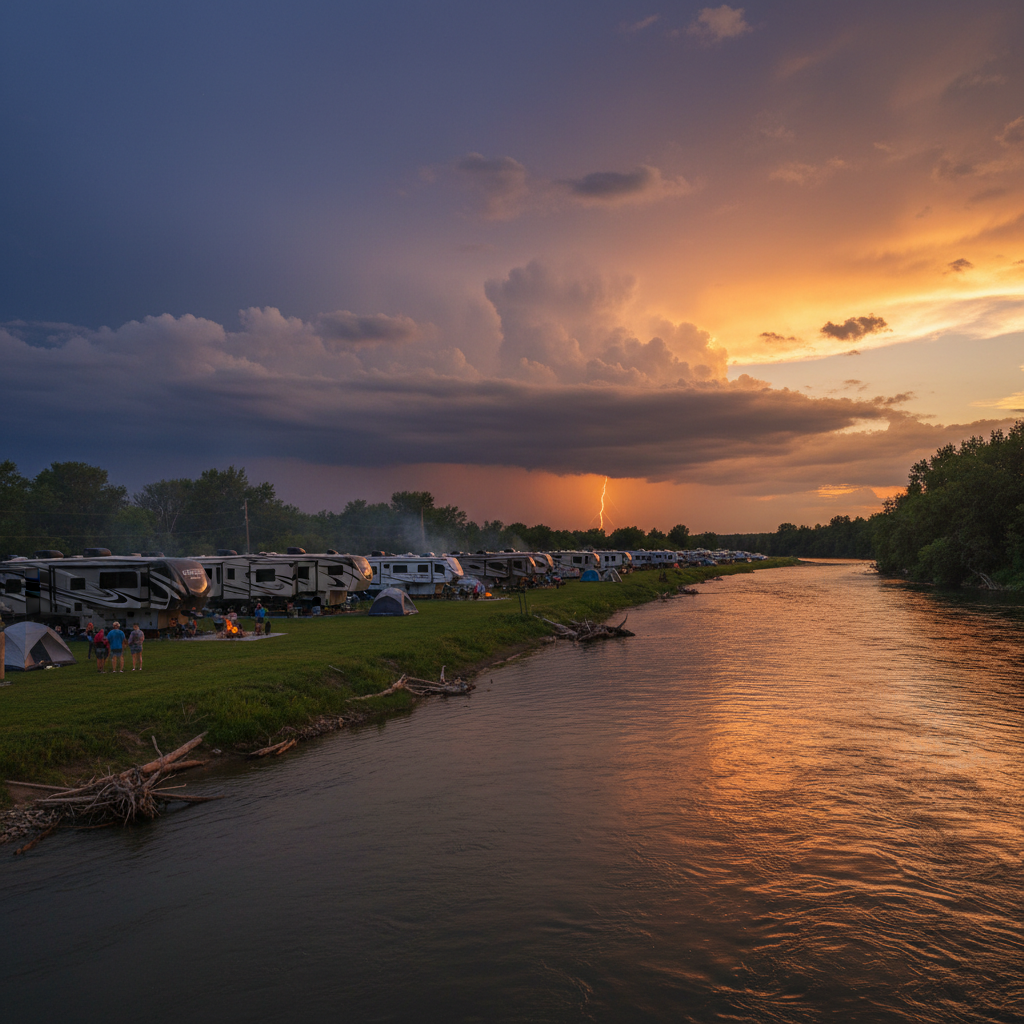
When the Water Comes Up Fast: What Every RV Camper Needs to Know
Flooding events near rivers and creeks can happen with terrifying speed — sometimes with little to no warning. Recent evacuations at RV parks along the San Gabriel River near Georgetown, Texas serve as a powerful reminder that one of camping's greatest joys — parking close to the water — can also come with serious risks. Whether you're a seasoned full-timer or a weekend warrior just getting started, knowing how to prepare for and respond to flash flooding could save your life and your rig.
At CampgroundViews.com, we want every camping trip to be an adventure you'll love telling stories about — not one you'll spend years trying to forget. So let's talk flood safety the right way.
Why RV Campers Are Especially Vulnerable to Flash Floods
RVs and trailers are heavy, but they're no match for moving water. Just 12 inches of fast-moving floodwater can sweep away a small vehicle, and 2 feet can carry away most RVs and trucks. Riverside campgrounds are naturally beautiful and deeply popular — but low-lying terrain near rivers is exactly where floodwater goes first.
Flash floods are particularly dangerous because they can strike without rain at your location. Storms miles upstream can send a wall of water rushing down a dry riverbed in minutes. By the time you hear it or see it, you may have very little time to react.
Before You Book: Do Your Flood Homework
The best flood safety starts before you ever hitch up the trailer. Here's how to research your campsite intelligently:
- Check campground elevation and terrain. When browsing campgrounds on CampgroundViews.com, use our virtual tours to get a real visual sense of the landscape — how close sites are to water, whether the ground slopes toward a riverbank, and what the surrounding terrain looks like.
- Look up flood history. Search the campground name along with "flood history" or check FEMA's Flood Map Service Center to understand the area's risk level.
- Read recent reviews. Campers who've been there during rain events often share invaluable first-hand insight about how a campground drains and handles wet weather.
- Ask the campground directly. A quick call to ask about their flood protocols and evacuation procedures tells you both how prepared they are and what to expect.
When You Arrive: Set Yourself Up for a Fast Exit
Once you're on-site, a few smart habits can dramatically improve your ability to respond quickly if conditions change:
- Park with your exit in mind. Avoid backing into spots that would require a complicated turn-around. Point your tow vehicle toward the exit whenever possible.
- Keep your keys accessible. Always know exactly where your keys are — every single night. In an emergency, fumbling for keys in the dark costs precious minutes.
- Don't fully level on soft ground near water. If rain is in the forecast, go easy on the leveling jacks so you're not fighting unstable, saturated ground when it's time to move.
- Know the campground's emergency exit routes. Walk or drive them on your first day. Identify the highest ground on the property.
How to Monitor Conditions While You Camp
Technology is your best friend when weather turns threatening:
- Download the NOAA Weather App or Weather Underground for hyper-local alerts.
- Enable Wireless Emergency Alerts (WEA) on your phone — these government-issued alerts can notify you of flash flood warnings even if your ringer is off.
- Invest in a battery-powered NOAA weather radio. Cell service at campgrounds is notoriously unreliable, and a weather radio works independently of towers.
- Keep an eye on the water, not just the sky. A river that begins to look muddy, rise visibly, or move faster than normal is a warning sign — even on a sunny day at your site.
If an Evacuation Order Comes: Go Immediately
This is the most important rule of all: when officials say evacuate, leave now. No campsite, no RV, and no amount of gear is worth your life. Don't wait to finish dinner, hook up every cable, or break camp perfectly. Unhook what you can quickly, secure what you must, and drive to higher ground.
Find Campgrounds You Can Trust
Choosing the right campground from the start is one of the best ways to reduce your flood risk. At CampgroundViews.com, our library of 3,600+ virtual tours lets you scout sites from home — seeing the real lay of the land before you commit. A little research goes a long way toward keeping your camping adventures safe, memorable, and full of the right kind of excitement.
Stay curious, stay prepared, and we'll see you out there — on high ground.