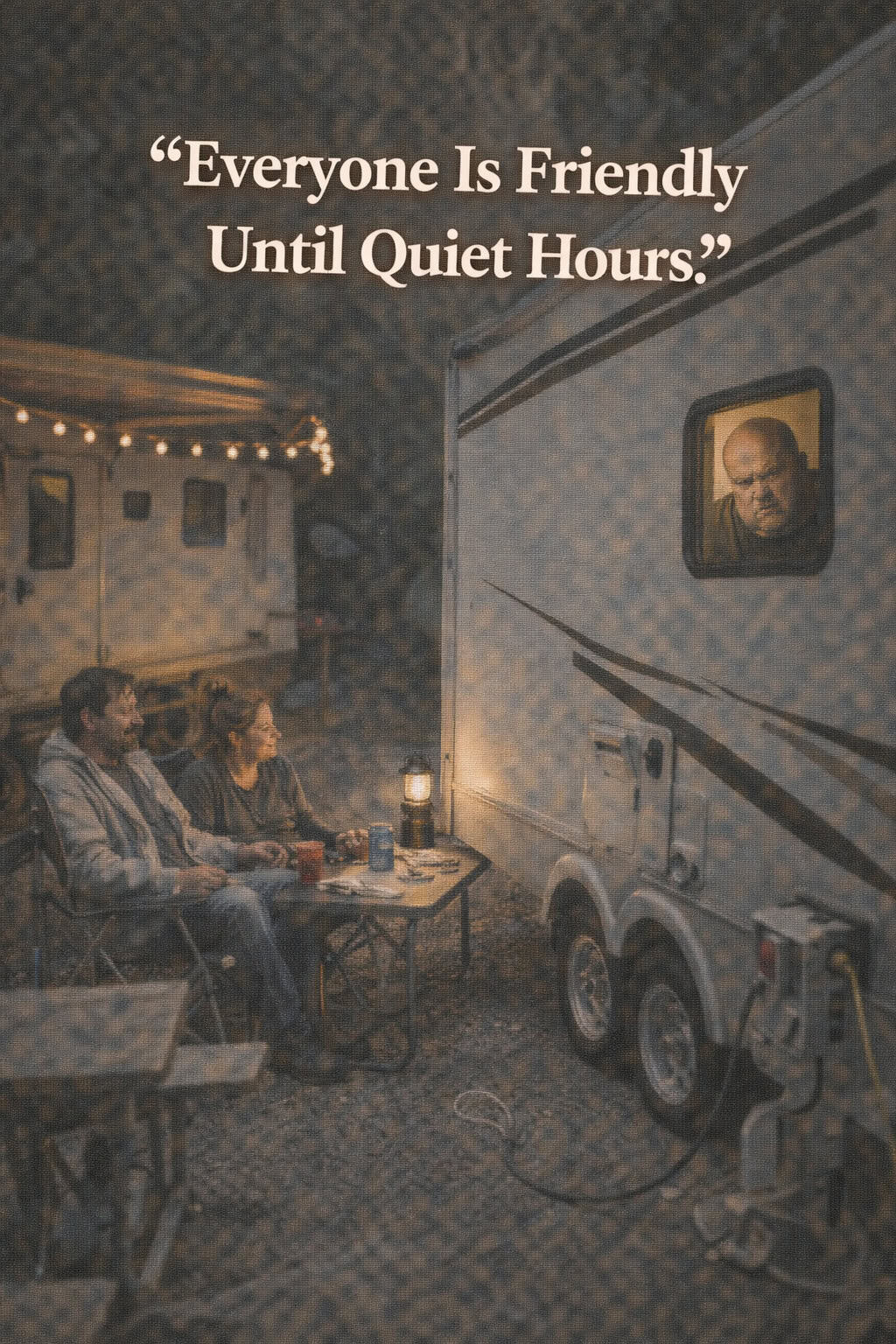
(And then the vibes get… contractual.)
The campground arrives friendly.
Smiles. Waves. Small talk about rigs and routes.
Everyone is relaxed. Communal. Optimistic.
And then the sun goes down.
The signs become relevant.
And quiet hours stop being a suggestion and start being a social agreement with consequences.
🌅 1. Daytime Campgrounds Are a Community
During the day, everyone is:
-
helpful
-
chatty
-
curious
People wave you in.
Compliment your setup.
Ask where you’re headed next.
It’s cooperative living with lawn chairs.
🌙 2. Quiet Hours Change the Power Structure
Once quiet hours begin, the campground doesn’t get unfriendly.
It gets serious.
Suddenly:
-
voices lower
-
music becomes suspicious
-
generators are judged
-
laughter feels louder than it should
No one says anything.
But everyone is listening.
🔊 3. Sounds Become Political
Before quiet hours, noise is just noise.
After quiet hours:
-
a slammed door is a statement
-
a barking dog is an incident
-
a raised voice is a choice
The same sound means different things depending on the time.
This is not hypocrisy.
This is policy.
👀 4. Everyone Becomes Hyper-Aware
You notice:
-
how loud your footsteps are
-
how much the door creaks
-
whether your chair scraped
-
how aggressively you zipped the tent
You’re not anxious.
You’re considerate under surveillance.
The campground is quiet—but alert.
🐕 5. Dogs Immediately Forget the Rules
Humans understand quiet hours.
Dogs do not.
This is when:
-
the one bark echoes
-
the apology is whispered
-
treats are deployed strategically
Every dog owner has a moment of quiet-hour panic.
This is a shared experience.
🔦 6. Lights Matter More Than You Think
Bright lights at night feel louder than sound.
You start thinking about:
-
porch lights
-
headlights
-
headlamps aimed directly at neighbors
No one asked you to turn it off.
But you know.
This is social intelligence.
😅 7. Friendly Doesn’t Disappear—It Just Pauses
Quiet hours don’t end the friendliness.
They suspend it.
In the morning:
-
smiles return
-
jokes resume
-
everyone pretends nothing happened
No one brings up the late-night coughing fit or the chair incident.
That’s professionalism.
🧠 8. Quiet Hours Are the Real Test of Camping Etiquette
Being friendly is easy.
Being considerate when tired, hungry, and done for the day?
That’s the skill.
Quiet hours separate:
-
people who camp
-
from people who understand camping
And most folks are doing their best.
💬 Final Thoughts
Everyone is friendly—right up until quiet hours.
Then everyone is respectful, alert, and deeply committed to peace.
That shift isn’t awkward.
It’s intentional.
It’s how strangers share space without conflict, judgement, or passive-aggressive flashlight signaling.
And if you accidentally break the silence?
Don’t worry.
Tomorrow morning, everyone will smile again like it never happened.
🐟 Want to choose sites that make quiet hours easier—more spacing, better layout, less sound travel? Use Campground Views to preview campground design before you book, so friendliness stays intact all day and night.
🔗 Follow us for more RV life truths, campsite social dynamics, and content for people who’ve absolutely whispered “sorry” into the dark and meant it.