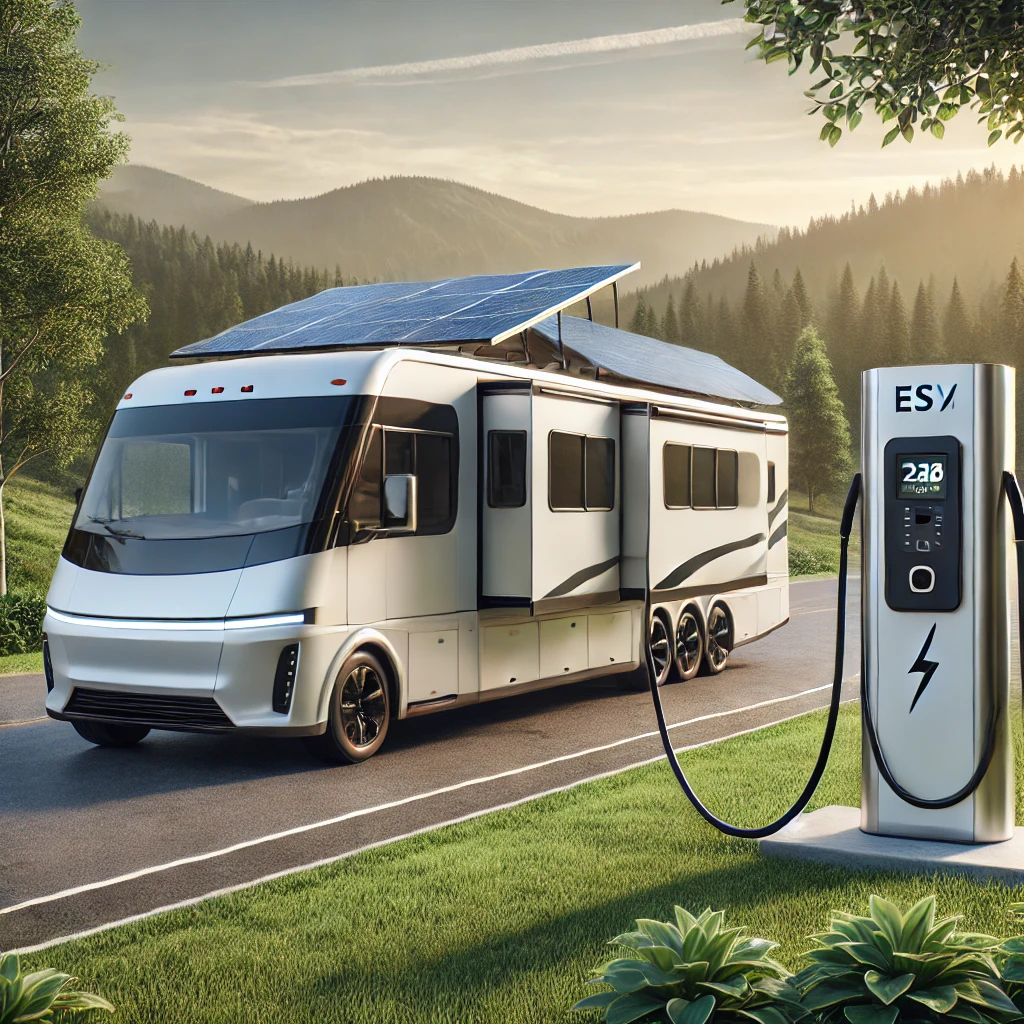
Are Electric RVs the Next Big Thing, or Just a Passing Trend?
For years, RVs have relied on gas and diesel, but as electric vehicles become more common, the question arises: Are electric RVs the future?
With rising fuel costs, stricter emissions regulations, and advancements in battery technology, the idea of an all-electric motorhome is more than just wishful thinking. Big names like Winnebago and Thor have already introduced prototype electric RVs, and more innovations are on the horizon.
But the big question remains: Are electric RVs practical? Are they worth the investment? And will they change the way we camp forever?
Let’s break down the pros, cons, and future possibilities of electric RVs.
1. What Exactly Is an Electric RV?
An electric RV is a motorhome that runs entirely on electricity instead of gasoline or diesel. It uses large battery packs, electric motors, and charging stations instead of internal combustion engines.
There are two types of electric RVs emerging:
🔹 Fully Electric RVs – These rely entirely on battery power, much like a Tesla or Rivian vehicle.
🔹 Hybrid Electric RVs – These combine an electric drivetrain with a backup gas or diesel engine.
While still in early development, companies like Winnebago and Mercedes-Benz are leading the charge in bringing eco-friendly, electric RVs to the market.
2. The Benefits of Going Electric
🔋 1. No More Gas Stations!
Electric RVs eliminate expensive fuel stops and rely on charging stations instead. With fuel prices always fluctuating, the idea of never paying for gas again is appealing.
🌱 2. Lower Environmental Impact
RVs burn a lot of fuel, making them one of the least eco-friendly travel methods. Switching to electric reduces emissions, air pollution, and overall environmental impact.
🤫 3. Quieter & Smoother Rides
Traditional RVs are loud, especially diesel rigs. Electric motors run almost silently, making for a quieter, more enjoyable drive—perfect for peaceful road trips.
🛠 4. Lower Maintenance Costs
Electric RVs don’t require oil changes, exhaust system repairs, or fuel system maintenance. Over time, this could save thousands of dollars in upkeep costs.
☀️ 5. Built for Solar & Off-Grid Living
Most electric RVs are being designed with integrated solar panels, meaning you could power your rig entirely off the sun.
💡 Pro Tip: Some companies are working on self-charging solar RVs, which could revolutionize boondocking!
3. The Challenges of Electric RVs
As exciting as electric RVs sound, there are some major challenges that still need to be addressed.
⚡ 1. Limited Range
Most EVs struggle with range anxiety, and electric RVs are no different.
🔹 Current prototypes only get 100-250 miles per charge
🔹 Gas and diesel RVs can easily drive 500+ miles on a single tank
Until battery technology improves, range limitations will be a major issue for RV travelers who love cross-country road trips.
⏳ 2. Long Charging Times
Filling up a gas RV takes 5 minutes. Charging an electric RV? It could take hours.
🔹 Level 1 charging (standard outlet): 24+ hours for a full charge
🔹 Level 2 charging (240V): 4-8 hours for a full charge
🔹 DC Fast Charging: 45 minutes – 1 hour for an 80% charge
Finding fast chargers designed for large RVs is still a challenge.
💰 3. High Upfront Cost
🔹 Current gas-powered RVs range from $80,000 - $500,000
🔹 Electric RVs are expected to cost 20-50% more
Until prices drop, electric RVs will remain a luxury item rather than an affordable alternative.
🛣 4. Charging Infrastructure Is Still Lacking
While Tesla, Electrify America, and other companies are expanding charging networks, most chargers are designed for cars—not 40-foot motorhomes.
Boondockers and off-grid campers may struggle to find reliable power sources.
💡 Pro Tip: Expect campgrounds and RV parks to install more charging stations in the coming years.
4. Which Companies Are Leading the Way?
Several major RV manufacturers are already working on electric RVs, and some are even available now.
🚐 Winnebago eRV2 – A fully electric Class B RV with 108 miles of range
🚐 Thor Vision Vehicle – A futuristic concept RV with 300-mile hybrid range
🚐 Mercedes-Benz EQV Camper – An electric van built for off-grid camping
🚐 Lightship L1 Trailer – The first all-electric travel trailer with built-in solar power
As technology improves and battery range increases, more companies will join the race for the perfect electric RV.
5. Is an Electric RV Worth the Investment?
So, should you wait for an electric RV or stick with gas or diesel? Here’s a quick breakdown:
✅ An electric RV is worth it if…
- You do short trips and stay near charging stations
- You want eco-friendly, quiet, and low-maintenance travel
- You plan to boondock with solar power
❌ It might not be worth it (yet) if…
- You travel long distances and need 500+ miles per trip
- You camp in remote areas without charging access
- You don’t want to pay a premium price for new tech
For now, electric RVs are best for weekend warriors, eco-conscious travelers, and tech-savvy campers. If you love cross-country road trips and off-grid boondocking, a hybrid or fuel-efficient RV may still be the better choice—for now.
Final Thoughts: The Road Ahead for Electric RVs
There’s no doubt that electric RVs are coming—but how soon they become mainstream is still up for debate.
With battery advancements, improved range, and more charging stations, electric RVs will eventually become a viable option for most travelers.
In the next 5-10 years, expect to see:
✅ Better range (400+ miles per charge)
✅ Faster charging times
✅ More affordable prices
✅ Self-sustaining solar options
Until then, gas and diesel RVs still reign supreme, but the future is definitely electric.
Would you buy an electric RV? Or is it too soon to make the switch?