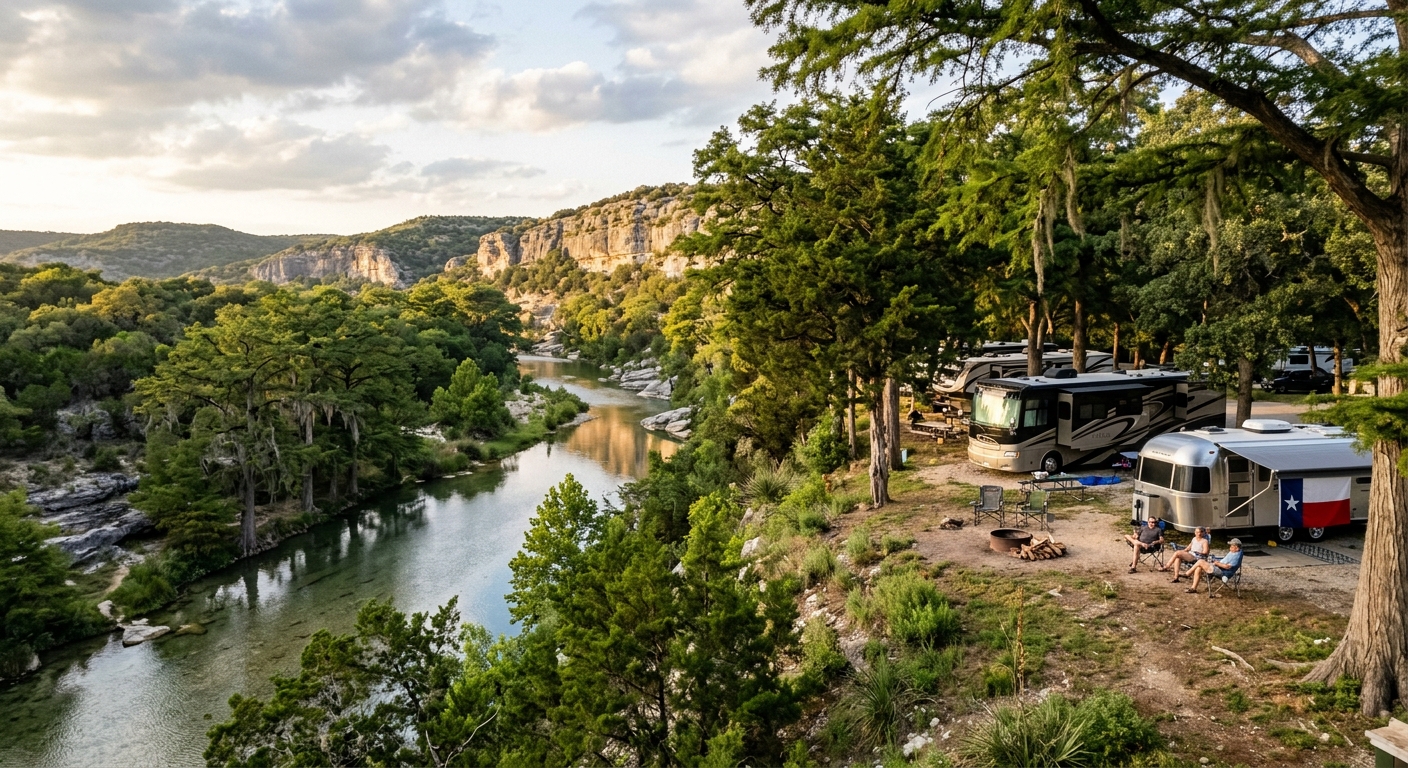
The Heart of Texas Camping Country Is Resilient — But the Landscape Has Changed
Texas Hill Country has long been the crown jewel of RV travel in the Lone Star State. With its rolling cedar-covered hills, crystal-clear swimming holes, peach orchards, and legendary campgrounds along the Guadalupe and Frio rivers, it draws millions of campers every year. But recent catastrophic flooding has forced every RVer and tent camper who loves this region to ask a critical question: How do we camp here safely and responsibly moving forward?
At CampgroundViews.com, we believe informed campers are empowered campers. So let's talk honestly about what's changing, what you need to check before you hitch up, and how the Hill Country camping culture is already showing the grit and resilience that defines Texas itself.
Why Hill Country Is So Vulnerable to Flash Flooding
The geology of Central Texas makes it one of the most flash-flood-prone regions in the entire United States — a fact that longtime locals know intimately but visiting RVers sometimes underestimate. The Edwards Plateau's thin, rocky limestone soil absorbs water poorly, meaning even a heavy upstream rainstorm miles away can turn a calm, knee-deep river into a raging torrent in under an hour.
Many beloved campgrounds sit right along riverbanks — that's exactly why campers love them. Waking up to the sound of the Guadalupe or the Frio is magic. But that proximity to water also means campgrounds can be heavily impacted when flood events occur. Roads wash out. Sites get buried in silt and debris. Infrastructure like water hookups, electric pedestals, and dump stations can be damaged or destroyed.
Before You Book: Do Your Research
The single most important thing you can do before rolling into Hill Country is verify that your destination is actually open and accessible. Here's a practical pre-trip checklist every RVer should run through:
- Check the campground directly. Call ahead or check the campground's website and social media pages. Many operators post real-time updates about road closures and site availability after weather events.
- Use CampgroundViews.com virtual tours. Our 3,600+ virtual tours let you visually scout campgrounds before arriving — so you know the terrain, the site layout, and what to expect. This is invaluable when conditions are changing.
- Monitor river gauges. The USGS Water Resources website and the Lower Colorado River Authority both publish live river gauge data. Know the gauge readings for rivers near your campsite.
- Download a flood alert app. Texas Flash Flood Council and local emergency management agencies offer apps and text alerts. Sign up before you leave home, not when you're already parked riverside.
- Have a backup campground identified. Always have a Plan B campground that sits on higher ground, just in case.
Rethinking Your Site Selection in Hill Country
Post-flood, smart Hill Country camping means being more intentional about where you park your rig. That dreamy pull-through site right on the river's edge? Give it a second look. Ask campground hosts about the site's flood history. Look for high-water marks on trees. Notice whether the site is in a natural drainage path.
Higher-elevation sites and those set back from riverbanks offer peace of mind without sacrificing the Hill Country experience. The sunsets over the juniper hills are just as beautiful from 50 feet up the ridge.
How Campground Owners Are Adapting
One of the most hopeful things happening right now is that Hill Country campground operators are innovating. We're already seeing owners invest in better drainage systems, relocate vulnerable sites to higher ground, build elevated tent platforms, and install real-time weather alert systems for guests. This region's camping culture isn't disappearing — it's evolving, and becoming more resilient in the process.
The Bottom Line: Hill Country Is Still Worth the Trip
The bluebonnets still bloom. The peaches are still sweet. The cold, clear rivers are still magic on a hot Texas afternoon. Texas Hill Country camping culture is deeply rooted, and it will adapt and endure. Your job as a modern RV traveler is simply to go in informed, flexible, and flood-aware.
Start your Hill Country campground search at CampgroundViews.com — where you can explore virtual tours, read real camper reviews, and find the perfect site that fits your adventure style, whatever the season brings.