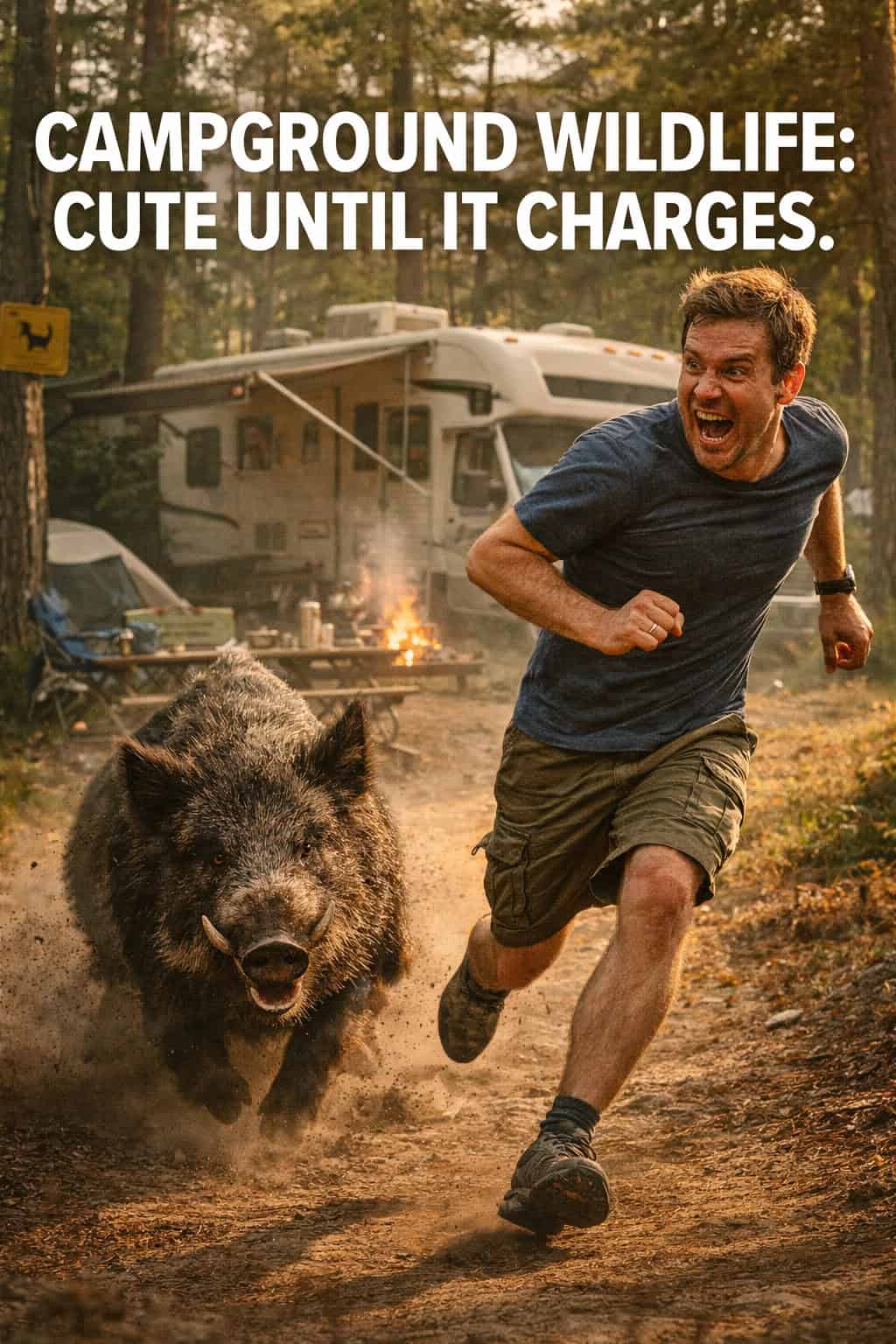
(Because “aww” can turn into “MOVE” in under two seconds.)
Campground wildlife is adorable… from a respectful distance.
The first time you see a deer stroll through your site, you feel like you’ve been chosen by nature.
Then it locks eyes with your snack bag.
Or your dog.
Or your cooler.
And suddenly you remember: this is not a petting zoo. This is a neighborhood, and you are the guest with the crunchy food.
Here’s the real-world truth about campground wildlife: it’s charming right up until it decides you’re in the way.
🦌 1. They’re Not “Friendly.” They’re Comfortable
Wildlife around campgrounds often acts bold because it’s used to people. That doesn’t mean it’s safe.
“Used to humans” can look like:
-
standing too close
-
not running away
-
wandering right into your site like it pays fees
Comfortable animals can still charge, bite, or kick when startled—especially if you crowd them or block their path.
🍟 2. Snacks Are the Real Problem (Sorry, It’s Us)
Most campground wildlife is motivated by one thing: easy food.
Even “tiny and cute” animals will:
-
raid a trash bag
-
chew through packaging
-
steal food off tables
-
turn your site into a buffet if you let it
If it smells like food, it’s an invitation—whether you meant it that way or not.
🐻 3. The Big Ones Don’t Need to Be Aggressive to Be Dangerous
With large wildlife, the risk isn’t just “attack.” It’s size + surprise.
A bear, elk, bison, moose—anything big enough to knock you down—can be dangerous simply because:
-
it’s powerful
-
it moves fast
-
it does not care about your personal space bubble
If one of these shows up, treat it like a moving hazard, not a photo opportunity.
🐿 4. The Small Ones Are the Most Audacious
Squirrels and raccoons have executive-level confidence.
They will:
-
stare you down
-
climb into your stuff
-
unzip bags like they’ve watched tutorials
-
steal food and look offended when you react
They’re cute. They’re also professional thieves with hands.
🐕 5. Dogs + Wildlife = Instant Chaos
Even the nicest dog can flip into “I must defend the camp” mode.
Do your future self a favor:
-
keep dogs close (lead, tie-out, or under control)
-
don’t let them chase wildlife
-
don’t let them sniff into bushes like it’s a hobby
Wildlife can injure a dog quickly, and a dog can escalate a situation just as fast.
🚮 6. Your Best Defense Is Boring: Clean Camp
“Clean camp” is the least glamorous tip and the most effective.
That means:
-
food stored properly (not “just for a minute”)
-
trash secured and taken out regularly
-
dishes cleaned promptly
-
no food left on picnic tables overnight
Wildlife comes back for repeat business. Don’t become a reliable supplier.
📸 7. Photos Are Fine. Getting Closer Is Not
If you have to step toward it to get the shot, you’re too close.
A good rule:
-
zoom in with your camera
-
not with your feet
If the animal changes behavior—stares, stomps, huffs, lowers its head, flicks ears, raises hair, or starts moving toward you—your cue is simple: increase distance calmly.
🧠 8. The “Charge” Moment: What Usually Causes It
Most charges happen because the animal feels:
-
surprised
-
threatened
-
cornered
-
protective (babies nearby)
-
blocked from its path
You don’t need to “win” the encounter. You need to create space and exit calmly without turning it into a chase scene.
💬 Final Thoughts
Campground wildlife is one of the best parts of being outdoors—until we forget it’s wild.
Enjoy the sightings. Respect the distance. Lock down the snacks.
Because the line between “cute” and “chaos” is usually one unattended bag of crisps.
🐟 Want to avoid sites that feel like a wildlife motorway? Use Campground Views to preview site layout, spacing, nearby tree lines, and general surroundings—so you can pick a spot that fits your comfort level (and keeps surprise visitors to a minimum).
🔗 Follow us for more RV life truths, campground survival tips, and humor for people who’ve definitely whispered, “Please don’t come over here” at a majestic animal.