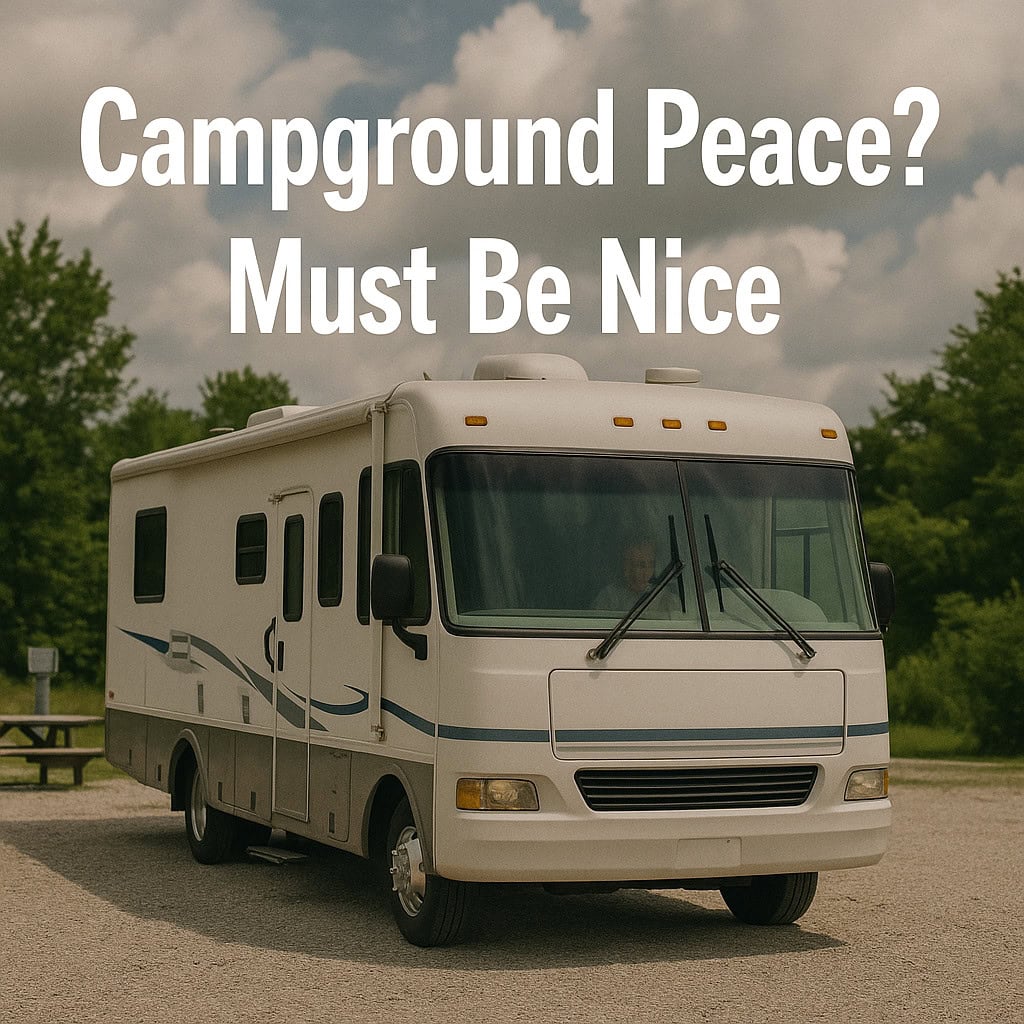
(Because tranquility is always two sites away.)
Somewhere out there, someone is sipping coffee in total silence. No generator. No barking. No kids doing laps around a picnic table like it’s NASCAR. Just birds, breeze, and vibes.
And you? You’re parked next to a man rebuilding his hitch at 10 PM, a dog that screams at squirrels, and a Bluetooth speaker that’s been playing the same “chill playlist” for three hours.
So yes—campground peace sounds lovely.
Must be nice.
🔊 1. Quiet Hours Exist… in Theory
Campgrounds post quiet hours like they’re laws of nature.
In practice, they’re more like: “We’d really appreciate it if you were quieter, if it’s not too much trouble.”
Common quiet-hour offenders:
-
storage bay slams
-
loud “one last drink” conversations
-
diesel idling
-
and the mysterious late-night dishwashing marathon
⚡ 2. The Generator Is Always in the Worst Spot
It’s never running over there.
It’s always running directly beside your bedroom window.
And it doesn’t just hum. It vibrates your soul.
Peace tactic: reposition your sleeping setup if you can—head to the opposite end, close the “generator side” windows, and run white noise. It’s not defeat. It’s strategy.
🐕 3. Every Loop Has a Dog With Strong Opinions
Some dogs are chill. Others treat every passing leaf as a security breach.
You’ll hear:
-
alert barking
-
excited barking
-
“I saw a squirrel once in 2019” barking
Most owners don’t realize how far it carries—especially at night.
🚶 4. Foot Traffic Turns Your Site Into a Sidewalk
If you’re near:
-
the bathhouse
-
the playground
-
the dump station
-
the park entrance
…you are not camping. You are hosting a parade.
You’ll get headlights, conversations, and that one person who walks close enough to read your licence plate like it’s a book report.
🔦 5. Lights: The Silent Peace-Killer
A bright LED floodlight from the neighbor's awning can turn your rig into a glowing fish tank.
Low-drama fixes:
-
close blinds on that side
-
use reflective window covers
-
reposition your chairs to face away
-
and—if it’s truly ridiculous—a polite ask goes a long way
🧠 6. The Real Secret: Peace Is Mostly About Site Choice
Peace isn’t luck. It’s positioning.
If you can choose, avoid:
-
bathhouses and laundry buildings
-
playgrounds, pools, and activity centers
-
entrance roads and main loops
-
“overflow” areas and group sites
-
generator-friendly zones (if you’re noise-sensitive)
The quieter sites are usually: tucked away, end-of-loop, spaced out, and not “convenient.”
💤 7. Your Best Peace Kit: Boring Stuff That Works
Not glamorous. Extremely effective:
-
earplugs
-
white noise (fan or app)
-
a bedtime routine (secure anything that flaps or clanks)
-
accepting that campgrounds are communal spaces—then protecting your sleep anyway
💬 Final Thoughts
Campground peace is real. It’s just not evenly distributed. Sometimes you get the serene site. Other times you get the loop’s unofficial entertainment district.
Either way, you can still have a great trip—just build your peace plan like a pro. Because nothing says “experienced RVer” like someone who packs earplugs with confidence.
🐟 Want better odds of actual quiet? Use Campground Views to preview site spacing, road proximity, and layout before you book—so you can pick the tucked-away spots and skip the “high-traffic, high-noise” zones.