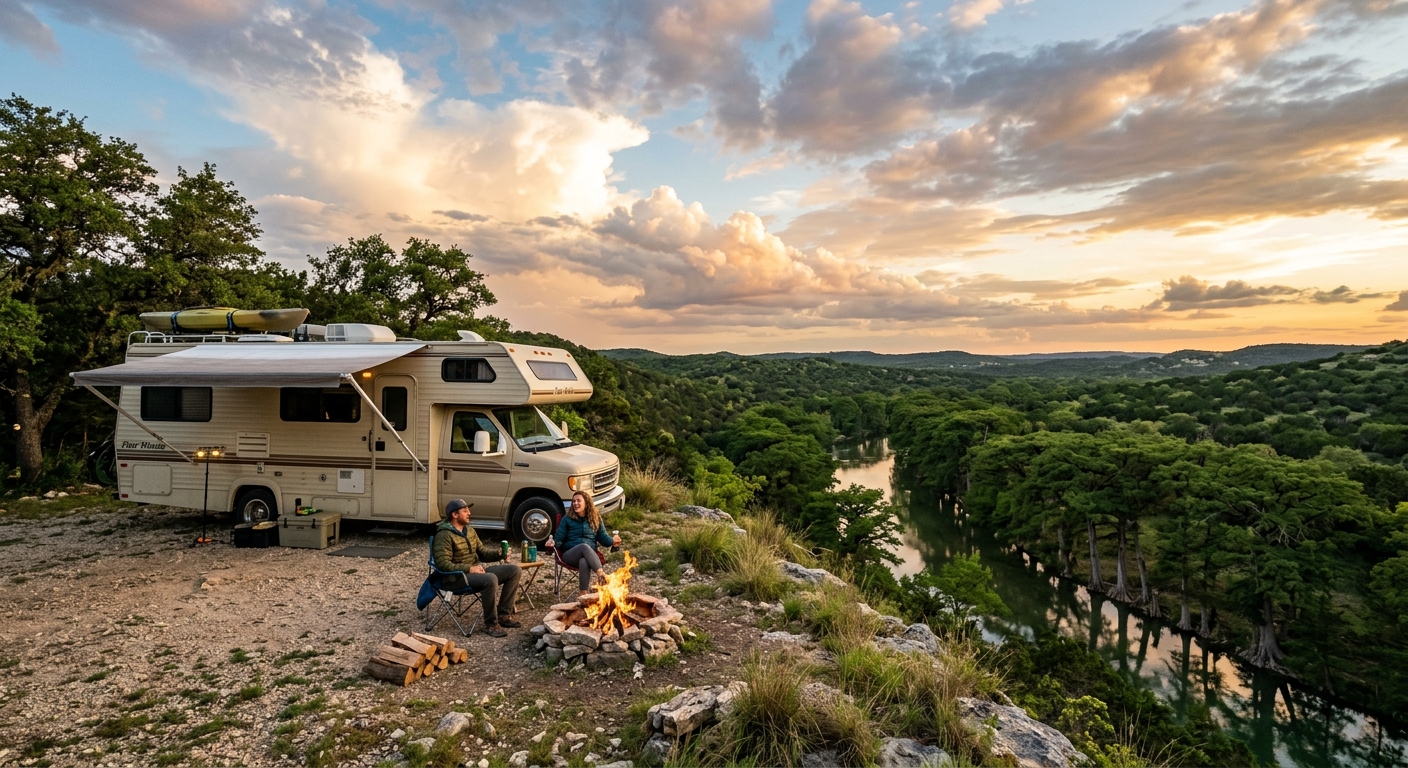
The Hill Country We Love Is Changing — Here's How to Adapt
Texas Hill Country has long been one of the crown jewels of American camping culture. The cypress-lined rivers, cedar-covered hills, and starry night skies draw hundreds of thousands of RVers, tent campers, and glampers every single year. But recent flooding events have sparked an important conversation: how does the camping community adapt when the landscape we love becomes less predictable?
At CampgroundViews.com, we believe knowledge is the best gear you can pack. Whether you're a seasoned boondocker or planning your first Hill Country getaway, here's how to camp smarter, safer, and more resiliently in flood-prone regions.
Understand the Terrain Before You Roll In
Hill Country's magic is also its risk. The region sits on the Edwards Plateau, where thin limestone soil and steep drainages can turn a sunny afternoon into a flash flood scenario within minutes. Dry creek beds — called "arroyos" locally — can fill with raging water faster than most people expect.
- Research elevation at your campsite. Even a few feet of elevation gain can mean the difference between staying dry and a dangerous situation.
- Study the watershed. Flooding can arrive from storms miles away that you never even see. Check upstream conditions, not just the weather directly overhead.
- Use topographic maps. Apps like Gaia GPS or OnX allow you to visualize drainage patterns before you set up camp.
The Golden Rules of Boondocking in Flood-Prone Areas
Dispersed camping and boondocking in Hill Country offer incredible freedom, but freedom requires responsibility. Follow these non-negotiable rules when camping off-grid in areas with flood history.
Never Camp in a Dry Creek Bed
It looks flat, sandy, and perfect. It is not. Dry creek beds are natural flood channels, and they fill with little to no warning. Always set up camp on high ground, well away from any drainage feature — a minimum of 200 feet is a smart baseline.
Have an Exit Plan Before You Need One
Before you unhitch, drive your exit route. Know which direction leads to higher ground. If your only road out crosses a low-water crossing, identify a secondary route. Low-water crossings in Hill Country are responsible for a disproportionate number of flood fatalities — never attempt to drive through moving water.
Monitor Weather Relentlessly
Download the NOAA Weather app and enable flash flood watch alerts for your specific county. The Hill Country spans multiple counties, and alerts are county-specific. Apps like Weather Underground give hyperlocal data that can be a lifesaver in this region.
How to Choose a Flood-Resilient Campground
If you prefer the security of a developed campground over boondocking, choosing the right one matters more than ever. This is exactly where CampgroundViews.com becomes your secret weapon. Our 3,600+ virtual tours let you visually scout campgrounds from home — you can see the lay of the land, spot low-lying areas, and assess site positioning relative to water features before you ever make a reservation.
When browsing Hill Country campgrounds, look for:
- Sites positioned on elevated pads or terraces
- Campgrounds with clear flood evacuation protocols posted or communicated at check-in
- Reviews that mention how the campground handled past rain events
- Facilities with solid road infrastructure rather than dirt-only access that can wash out
Pack for the What-Ifs
Smart Hill Country campers treat flood preparedness the same way desert campers treat extra water — it's non-negotiable kit.
- Waterproof dry bags for electronics, documents, and a change of clothes
- A weather radio with battery backup for areas with spotty cell service
- An emergency whistle and flashlight stored in an easy-to-grab location
- Extra medications in a waterproof case in case evacuation cuts your trip short
Hill Country Isn't Going Anywhere — And Neither Is Its Camping Culture
Flooding events are sobering reminders that nature sets the rules. But the Texas Hill Country camping community is resilient, adaptive, and deeply rooted in a love for this land. By camping smarter — researching terrain, monitoring weather, choosing well-positioned sites, and packing for emergencies — we can honor that culture while keeping ourselves and our families safe.
Start your next Hill Country adventure right by exploring campgrounds on CampgroundViews.com, where virtual tours give you a real look at the land before you commit. Because the best camping trip is one where the only thing overflowing is your sense of adventure.