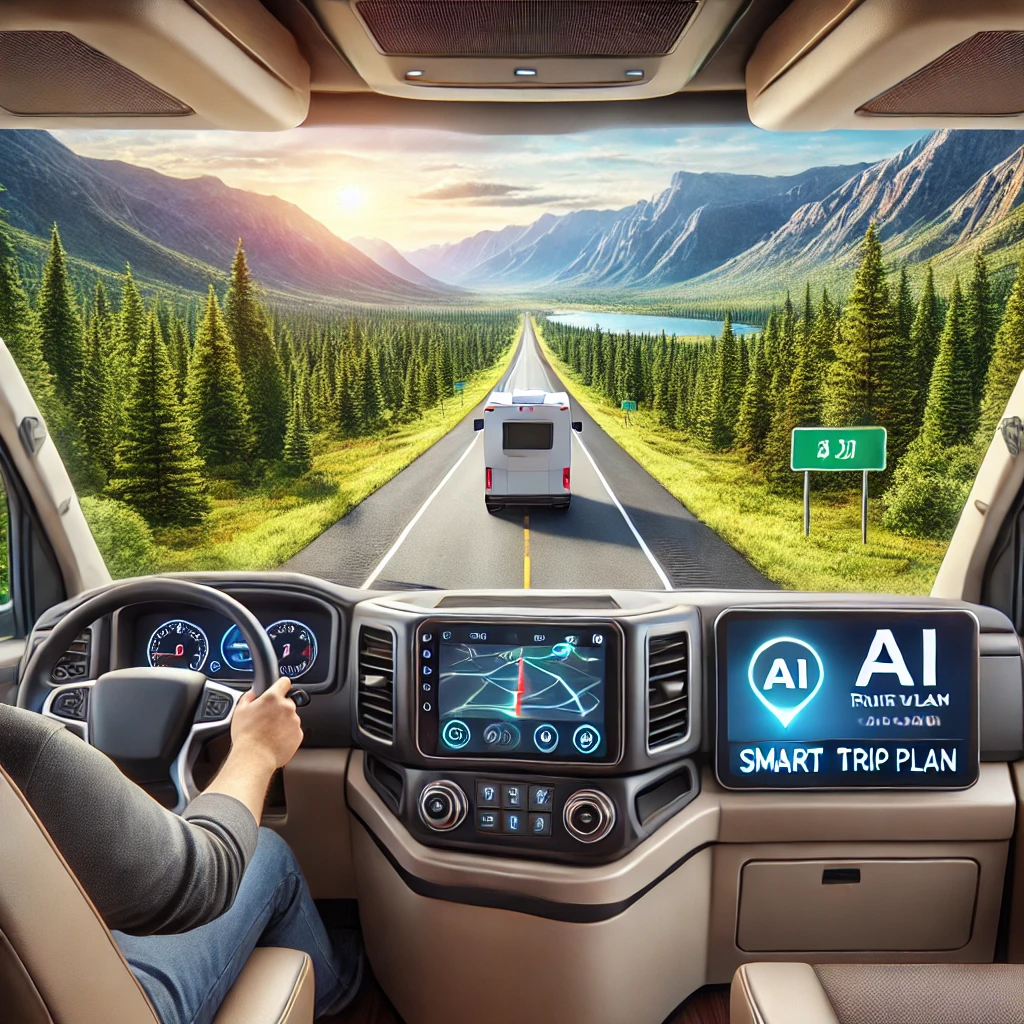
Is AI the Ultimate Road Trip Co-Pilot?
Once upon a time, planning an RV trip meant unfolding giant paper maps, making endless phone calls to campgrounds, and hoping you didn’t end up on a road with a low-clearance bridge. Today, artificial intelligence (AI) is changing the game, promising smarter, faster, and more efficient trip planning.
But can an AI actually plan the best RV route? Can it handle detours, campground availability, road conditions, and—most importantly—your personal travel style?
Let’s put AI-powered trip planning to the test.
1. How AI Trip Planners Work
AI-powered trip planners analyze data to create optimized routes based on your preferences. These tools use:
🚐 Real-time traffic & road conditions – AI reroutes based on accidents, closures, and weather.
⛽ Gas price tracking – Finds the cheapest fuel stops along your route.
🏕 Campground recommendations – AI suggests sites based on availability, reviews, and amenities.
📍 Custom attractions – Highlights scenic stops, restaurants, and must-see landmarks.
Some of the most popular AI-powered trip planning tools today include:
✔ RV LIFE Trip Wizard – Designed specifically for RVers, avoiding low bridges and bad roads.
✔ Google Maps + AI Extensions – Not RV-specific, but smart enough to find fast routes.
✔ Copilot GPS – Includes voice-guided navigation tailored for larger vehicles.
✔ ChatGPT & AI Assistants – Can generate detailed itineraries based on personal interests.
2. What AI Does Better Than Humans
AI excels at processing huge amounts of data—something no human can do as quickly. Here’s where AI can outshine even the most experienced road-trippers:
✅ Optimizing Routes for Efficiency
AI calculates the fastest and most fuel-efficient way to get from Point A to Point B, factoring in traffic, road closures, and even terrain elevation.
✅ Avoiding RV Hazards (Low Bridges, Steep Grades, etc.)
Ever driven your RV down a road only to find a 10-foot clearance bridge ahead? AI trip planners specifically for RVers help you avoid dangerous or impossible routes.
✅ Campground Booking & Availability
AI can scan multiple campground databases at once, helping you find open spots instead of calling five different places.
✅ Fuel & Budget Optimization
AI tracks gas prices in real time, suggesting the cheapest stops before you run low.
✅ Weather-Responsive Routing
A good AI planner monitors storms and extreme temperatures, rerouting if necessary—something even seasoned travelers might forget to check.
🚀 In short, AI is great at logistics, helping you avoid mistakes, delays, and wasted fuel.
3. Where AI Trip Planning Falls Short
Despite its power, AI still has limitations, especially for travelers who like flexibility and spontaneity.
❌ AI Lacks the “Human Touch”
AI doesn’t know your personal travel style. Some RVers love scenic detours, while others prioritize the fastest route. AI can make educated guesses, but it doesn’t always get it right.
❌ Limited Local Knowledge & Hidden Gems
AI tools rely on data and reviews, which means they might miss lesser-known, off-the-beaten-path spots that a local might recommend.
❌ Can’t Handle Every Unexpected Change
Flat tire? Sudden urge for a detour? AI can’t fully replace human decision-making in unpredictable situations.
❌ Inconsistent Cell Coverage
Many AI tools require internet access, which can be a problem if you’re camping off-grid.
4. Can AI Plan a BETTER Route Than an Experienced RVer?
To test AI’s real-world capabilities, let’s compare AI vs. Human Trip Planning for a sample route:
🛣 Route: Denver, CO ➝ Grand Canyon, AZ ➝ Yosemite, CA ➝ Portland, OR
🚀 AI-Powered Route:
✔ Shortest drive time
✔ Avoids bad roads for RVs
✔ Finds cheapest gas stations
✔ Includes well-known tourist stops (Grand Canyon, Zion, Sequoia)
👤 Human-Planned Route:
✔ Includes scenic byways instead of just highways
✔ Adds local restaurants, lesser-known state parks
✔ Adjusts based on past experience & personal travel style
✔ Allows for more spontaneous stops & flexibility
🏆 Winner? It depends.
- If you want efficiency, real-time updates, and automated convenience, AI wins.
- If you prefer a flexible, scenic, and personalized experience, human planning is better.
🚐 The best option? A mix of both! Use AI for the logistics and your own judgment for the adventure.
5. The Future of AI in RV Travel
AI-powered trip planning is only getting better. Here’s what the future might hold:
🤖 Voice-activated RV assistants – Ask your RV’s AI, “Where’s the next best boondocking spot?” and get instant results.
🛰 Satellite-driven off-grid navigation – AI could help travelers plan routes with zero cell service.
🚐 Self-driving RVs? – It’s a possibility! AI might one day help drive and navigate long-haul trips.
🎯 Hyper-personalized recommendations – AI may soon understand your travel preferences better than you do.
6. Should You Trust AI to Plan Your Next RV Trip?
Yes—BUT with human backup. AI is a fantastic tool for:
✔ Avoiding road hazards
✔ Finding fuel & campground availability
✔ Optimizing routes for efficiency
✔ Tracking real-time weather & traffic
But don’t rely on AI alone. Use your own experience, research, and personal preferences to fine-tune your adventure.
🚀 Best Practice: Let AI do the groundwork, but trust your instincts for the final route. After all, the best RV trips aren’t just about getting there—they’re about the journey itself.
🛻 Want to see your campsite before you book? Take a 360-degree virtual tour at CampgroundViews.com and make AI-powered planning even smarter!